The Texas Wellness Report:
Across Texas, wellness is shifting from occasional escape to everyday resilience, with clients prioritizing recovery, skin longevity, personalization, safety, and care. Read more at beautyspotmagazine.com.

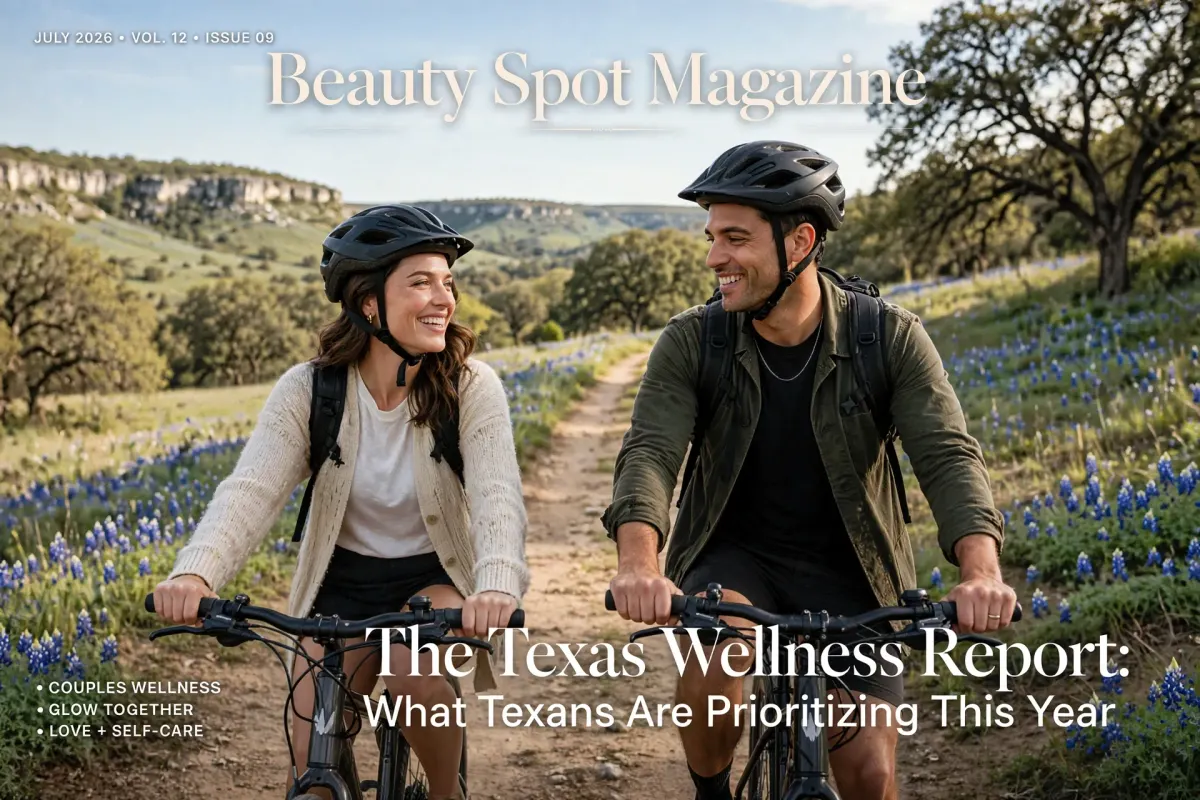
What Texans Are Prioritizing This Year
Across Texas, wellness is becoming less about escape and more about stamina.
The modern Texas consumer is not simply booking a spa day to disappear from life for a few hours. She is looking for ways to feel more rested, more resilient, more comfortable in her skin, and more capable of keeping pace with a life that rarely slows down.
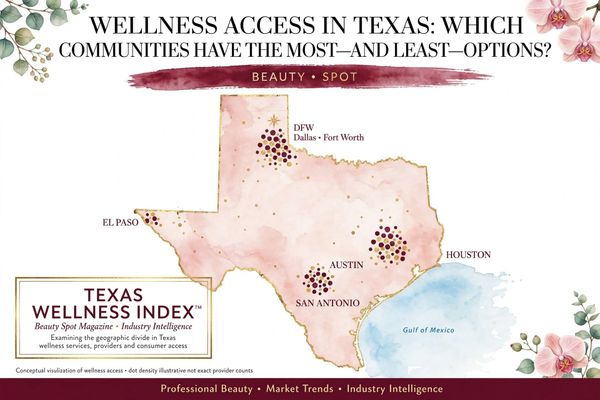
From Dallas and Houston to Austin, San Antonio, the Rio Grande Valley, West Texas, and the fast-growing communities in between, the wellness conversation is changing. The old model of occasional indulgence is giving way to something more intentional: consistent care, better recovery, smarter maintenance, and a deeper understanding of what the body needs before it reaches exhaustion.
This year, Texans are asking a more sophisticated question.
Not, “How do I look better by the weekend?”
But, “How do I feel better in the life I am actually living?”
That shift is quietly reshaping beauty, aesthetics, fitness, hospitality, recovery, and spa culture across the state. It is also creating a major opportunity for professionals who understand that wellness is no longer one category on the menu.
It is becoming the philosophy behind the entire client experience.
The new Texas luxury is not excess. It is energy, clarity, confidence, and the feeling that the body has finally been allowed to exhale.
Stress Recovery Is Becoming Essential
Texans are carrying visible fatigue.
Long commutes, punishing summer heat, constant screen exposure, family responsibilities, entrepreneurial pressure, irregular sleep, and the emotional weight of an always-on culture have made recovery one of the strongest forces in the wellness market.
Clients are increasingly drawn to treatments that create an immediate shift in how they feel. Warm linens, scalp massage, low lighting, aromatherapy, cooling rituals, infrared heat, compression, hydrotherapy, slower facial movements, and intentional breathing cues all speak to the same desire: relief.
Not performance. Not productivity. Relief.
The strongest wellness spaces are responding by slowing the experience down. The consultation feels more thoughtful. The lighting is softer. The transitions are quieter. The treatment is designed not only around the skin or body, but around the nervous system of the person lying on the table.
That does not mean every service needs to be wrapped in clinical language. In fact, the most luxurious spaces often communicate restoration through atmosphere rather than explanation. The room feels settled. The provider feels present. The client is not rushed through a protocol.
She feels held.
Professional wellness material in the Beauty Spot source library positions body treatments as part of a broader strategy involving relaxation, hydration, circulation support, recovery, skin health, and emotional well-being. It also reflects the growing value clients place on experiences that pair visible benefits with emotional restoration.
For Texas spa owners, this may be the clearest business lesson of the year: the most compelling service menu is not always the one with the most devices.
It is the one that most clearly answers the client’s real problem.
“I am tired, overstimulated, and disconnected from my body.”
Skin Longevity Is Replacing Quick-Fix Beauty
The obsession with instant transformation is beginning to mature.
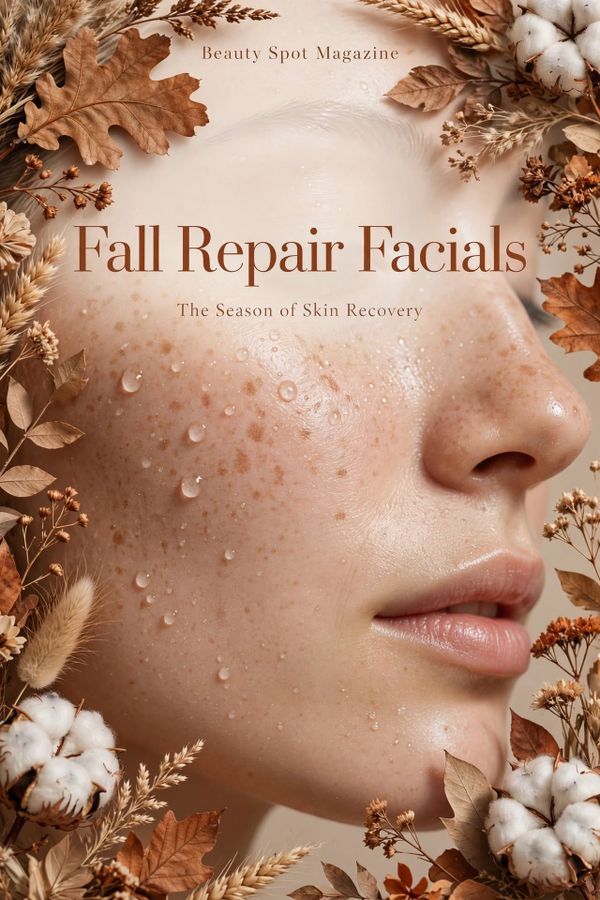
Texans still want results, but the language around those results is changing. Clients are becoming more interested in preserving skin quality, protecting the barrier, supporting hydration, maintaining elasticity, and building routines that age well over time.
This is the rise of skin longevity.
Instead of waiting for concerns to become advanced, consumers are investing earlier in consistent care. They are asking more informed questions about collagen support, environmental stress, dehydration, pigmentation, sensitivity, sun exposure, and long-term maintenance.
They are also beginning to understand that the treatment room is only one part of the equation.
Professional care works best when it is supported by realistic home routines, sleep, hydration, nutrition, and consistency. The client seeking “glow” may actually be dealing with dehydration, barrier disruption, inflammation, environmental stress, or an overly aggressive product routine.
The source material supporting this article identifies preventive maintenance, healthy collagen support, elasticity, hydration, circulation, and barrier integrity as central themes in the next generation of skin and body wellness.
Texas makes this conversation especially relevant. Heat, ultraviolet exposure, heavy air conditioning, seasonal dryness, outdoor lifestyles, and frequent travel between climates can all influence how skin behaves.
The opportunity for estheticians is not to promise perfection.
It is to become the professional who helps the client recognize patterns, understand her skin, and make better decisions over time.
That is where modern authority lives.
Personalization Is No Longer Optional
The one-size-fits-all wellness era is fading.
Texans are becoming more selective about treatments, supplements, skincare, fitness, recovery, and memberships. They want recommendations that reflect their schedule, stress level, age, sensitivities, goals, lifestyle, and financial priorities.
Personalization is no longer a luxury add-on.
It is becoming the expectation.
In the treatment room, that may mean adjusting exfoliation, temperature, massage pressure, product selection, session length, or post-treatment guidance. In a wellness business, it may mean creating distinct pathways for recovery, corrective skin support, maintenance, seasonal care, or event preparation instead of offering one generic monthly service.
The strongest providers are moving away from asking, “What treatment would you like?”
They are asking, “What are you trying to feel, improve, maintain, or prevent?”
That question changes the entire experience.
It allows the professional to position services around meaningful outcomes without making medical claims. It also creates a more intelligent client journey, one in which the consultation, service, home care, and rebooking strategy feel connected rather than transactional.
The client does not want to feel like appointment number six.
She wants to feel remembered.
Whole-Body Care Is Entering Its Luxury Era
Facial skincare may have led the wellness conversation, but body care is quickly catching up.
Texans are showing greater interest in body exfoliation, hydration rituals, scalp care, compression, thermal experiences, massage, recovery treatments, and services designed to improve the appearance and feel of the skin below the neck.
This is more than a service trend.
It is a cultural shift.
For years, body treatments were positioned as special-occasion indulgences. Now they are becoming recurring wellness appointments. Clients are beginning to see full-body care not as vanity, but as maintenance.
That creates space for elevated rituals that blend sensory luxury with responsible education. A body treatment can soften dry skin, support relaxation, improve the temporary appearance of texture, and create a stronger sense of physical well-being without being marketed as a cure-all.
The most credible businesses will move away from exaggerated detox language, aggressive sculpting promises, and medicalized claims.
Instead, they will lead with comfort, hydration, recovery, consistency, skin quality, and realistic expectations.
Quiet luxury beauty is finding its way into body care, too.
Wellness Has to Fit Real Life
The future of Texas wellness is recurring, convenient, and integrated.
Clients are not necessarily looking for more appointments.
They are looking for better-designed routines.
That might mean a monthly facial, a seasonal body treatment, a scalp ritual, a recovery session after travel, a barrier-focused home routine, or a membership that creates structure around self-care.
The value is not simply in frequency.
It is in reducing decision fatigue.
Memberships work best when they make wellness easier to maintain. For spa owners and beauty entrepreneurs, this means recurring revenue should be built around continuity rather than discounting.
The most premium membership is not the one that makes services feel cheaper.
It is the one that makes the client feel known.
The best programs create rhythm: consultation, treatment, progress review, home care, seasonal adjustment, and rebooking. In a state as large and lifestyle-diverse as Texas, convenience and consistency may matter just as much as luxury.
A client may love an exceptional treatment.
But she builds loyalty around a system that fits her life.
Trust Is Becoming Part of the Luxury Experience
As wellness services become more advanced, Texans are also becoming more conscious of safety.
Clients may not understand every device, ingredient, or licensing distinction, but they can feel when a provider is clear, confident, and honest. They notice when contraindications are taken seriously. They notice when expectations are realistic. They notice when a professional explains what a treatment can and cannot do.
This is especially important in Texas, where esthetic and medical services must remain clearly distinguished.
The Texas compliance framework in the Beauty Spot library emphasizes that advanced education does not automatically expand legal scope and that professionals must understand where esthetic services end and medical practice begins.
For beauty professionals, compliance should not be treated as a limitation to hide.
It can be a luxury differentiator.
High-trust clients value sanitation, documentation, informed consent, proper referrals, realistic treatment planning, and providers who know when not to proceed.
The future belongs to the professional who can say, with confidence:
“This is what I can safely do for you. This is what requires another provider. And this is how we build the right plan.”
That level of clarity does not weaken the client experience.
It elevates it.
What This Means for the Texas Beauty and Wellness Industry
The strongest opportunity this year is not simply launching another trendy service.
It is creating a more coherent wellness ecosystem.
That ecosystem may include skin health, body care, scalp wellness, recovery, stress relief, hydration, education, memberships, home care, and strategic referrals. It should feel emotionally restorative, commercially intelligent, and professionally responsible.
The Beauty Spot storytelling framework emphasizes the importance of separating signal, meaning, impact, watch points, and story opportunities rather than blending observation with unsupported certainty.
Viewed through that lens, the Texas wellness picture becomes clear.
The signal is a move toward recurring, personalized, recovery-centered care.
The meaning is that wellness is becoming part of everyday infrastructure rather than an occasional luxury.
The impact is that spas, estheticians, med spas, wellness studios, beauty brands, and membership-based businesses will need to design services around continuity, trust, personalization, and lived results.
The areas to watch include scalp wellness, body skin longevity, recovery memberships, sensory spa design, noninvasive technology, hydration-centered services, sleep-supportive rituals, menopausal wellness, and stronger collaboration between esthetic and medical providers.
The opportunity belongs to businesses that combine elevated hospitality with clear education, conservative claims, legal awareness, and consistent care.
The Final Word
Texans are not moving away from beauty.
They are asking beauty to become more meaningful.
They want it to feel restorative. They want it to support confidence without creating pressure. They want professional expertise without intimidation. They want visible care, emotional relief, and the sense that their appointments are part of a larger commitment to living well.
The most important wellness trend in Texas this year may not be a treatment, device, ingredient, or modality.
It may be the decision to stop treating well-being as an emergency response.
Wellness is becoming maintenance.
Beauty is becoming longevity.
And luxury is becoming the freedom to feel like yourself again.