The Most Requested Cosmetic Procedures of 2026
Discover the cosmetic procedures defining 2026, from refined injectables to regenerative aesthetics and personalized care. Read more at Beauty Spot Magazine and subscribe for exclusive beauty insight.

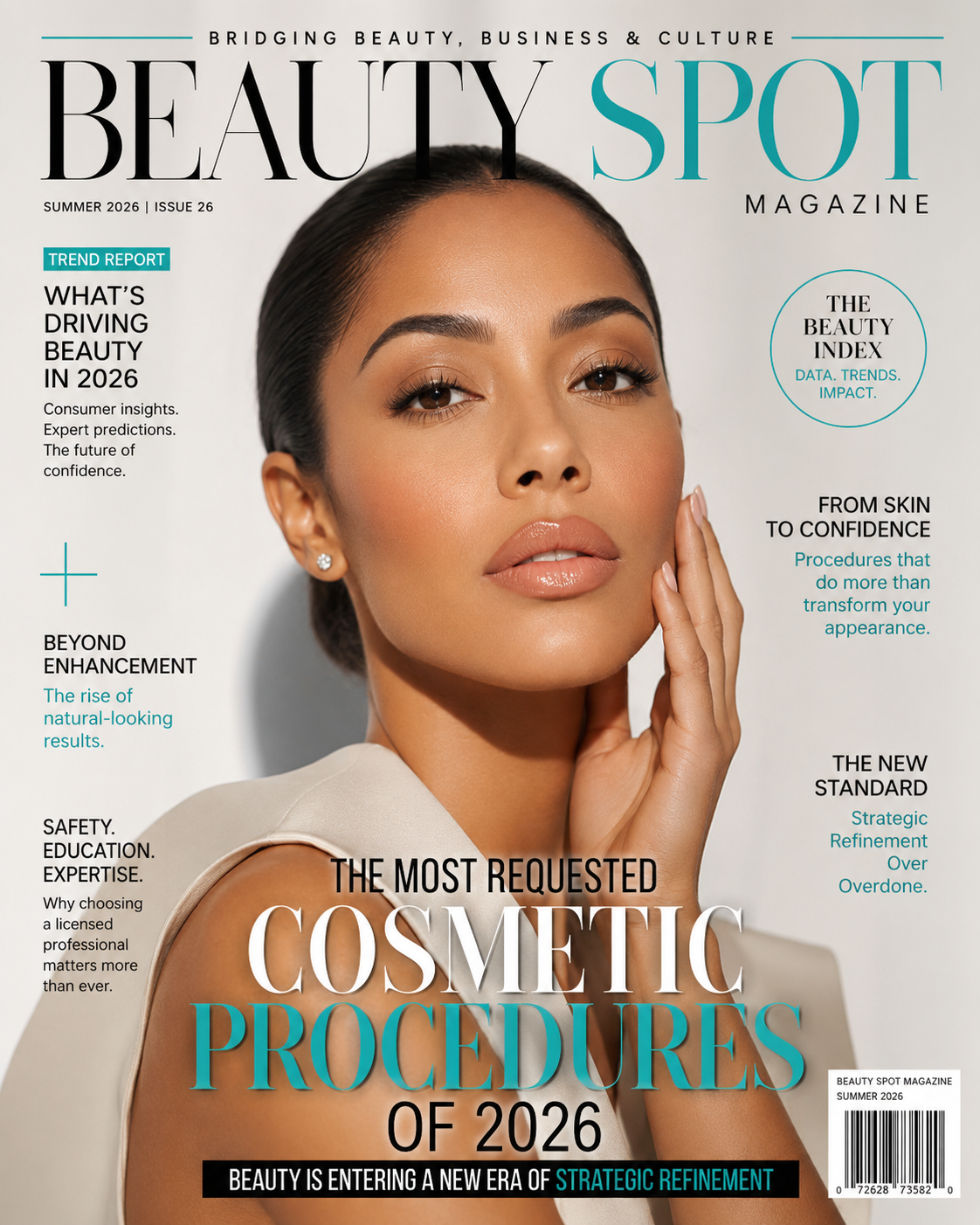
Beauty is entering a new era of Strategic Refinement
The defining cosmetic look of 2026 is not dramatically altered. It is rested, polished, structurally balanced and almost impossible to identify as “work.” Clients are still seeking transformation, but the language of transformation has changed. They are asking to look refreshed rather than frozen, lifted rather than overfilled, luminous rather than heavily resurfaced. They want skin that photographs beautifully in natural light, facial contours that remain expressive and results that fit into real life without announcing the appointment that created them.
This shift is reshaping treatment rooms across the country, particularly in image-conscious Texas markets where medical spas, cosmetic practices and advanced skin studios are serving increasingly educated clients. Today’s patient arrives with screenshots, ingredient knowledge, device comparisons and a clear understanding of the difference between temporary glow and long-term correction. She may ask about collagen banking, skin longevity, regenerative aesthetics or facial balancing before she ever asks about a traditional anti-aging service.
The procedures attracting the most attention this year reflect that sophistication. They are less about chasing perfection and more about maintaining quality: skin quality, tissue quality, proportion, movement and confidence.
“The new luxury is not looking treated. It is looking extraordinarily well.”
Neuromodulators Remain the Gateway Procedure
Wrinkle-relaxing injectables continue to hold their place as one of the most frequently requested cosmetic treatments because they deliver visible refinement with relatively little interruption to daily life. Clients commonly seek treatment for expression lines across the forehead, between the brows and around the eyes, but the modern conversation has become more nuanced than simply “erasing wrinkles.”
The most sophisticated providers are focusing on movement-preserving placement, facial balance and individualized dosing. Younger patients may approach neuromodulators preventively, while established clients often use them as part of a larger maintenance strategy. There is also increased interest in treating areas beyond the classic upper face, including the lower face and jawline, when clinically appropriate.
The appeal is clear: the treatment is familiar, customizable and discreet. Yet it remains a medical procedure requiring proper assessment, informed consent and qualified administration. The best outcome is not immobility. It is a face that looks calmer while still belonging unmistakably to the person wearing it.
Dermal Filler Is Becoming More Selective
Filler has not disappeared, but the era of indiscriminate volume is losing momentum. This year’s client is more likely to request strategic facial balancing than generalized fullness. Lips remain popular, yet the preferred result is increasingly soft, proportionate and anatomically respectful. Chin projection, jawline definition, cheek support and correction of isolated contour concerns are also driving consultations.
At the same time, many experienced injectors are becoming more conservative. They are evaluating existing product, tissue quality, facial movement and whether filler is truly the right answer. In some cases, the most intelligent treatment plan may involve dissolving old filler, pausing injections or redirecting the client toward skin tightening, collagen stimulation or surgical consultation.
This is an important evolution. Luxury aesthetics is no longer defined by how much product can be placed. It is defined by judgment.
Biostimulators and Collagen Banking Are Moving Center Stage
One of the strongest movements in cosmetic medicine is the rise of biostimulatory treatments designed to support the body’s own collagen response. Rather than creating immediate, highly visible volume, these procedures are often chosen for gradual improvement in firmness, structure and overall tissue quality.
The phrase “collagen banking” has become especially influential among clients in their thirties and forties who are thinking beyond wrinkle correction. They are not waiting for dramatic laxity before taking action. They are investing in the skin and supporting structures earlier, with the expectation that thoughtful maintenance may preserve a more resilient appearance over time.
This category appeals to the quiet-luxury client because results develop progressively. The face does not suddenly look different. It begins to look stronger, smoother and more rested.
Microneedling and RF Microneedling Continue to Dominate Skin Rejuvenation
Microneedling remains one of the most talked-about procedures for clients concerned with uneven texture, enlarged pores, fine lines and the appearance of acne scarring. Radiofrequency microneedling has intensified that interest by combining controlled needling with energy delivery in medically appropriate settings.
Current Texas service positioning prominently features traditional microneedling, microneedling with platelet-rich plasma, PDRN-based options, exosome-associated offerings and radiofrequency microneedling among advanced rejuvenation services. These treatments are commonly marketed around collagen support and improvement in visible texture, fine lines and acne-scar appearance.
However, this is also one of the areas where trend and compliance must be carefully separated. Treatment depth, device classification, product use and whether tissue is intentionally penetrated can affect who may legally perform a service. Texas professionals must distinguish between what a training course demonstrates and what their license, setting and supervision legally permit. The Beauty Spot Texas legal framework emphasizes that procedures extending beyond superficial esthetic practice may move into medical territory.
Demand may be high, but scope awareness must be higher.
Hydration Facials Are the New Maintenance Luxury
Not every client wants an injectable or aggressive corrective procedure. Device-assisted cleansing and hydration treatments remain highly requested because they offer immediate polish with minimal social downtime. HydraFacial-style services, customized medical facials and layered hydration protocols are especially attractive before events, travel, photography and seasonal transitions.
Current Texas treatment menus position these services around deep cleansing, hydration, clarity and radiance, with multiple levels of customization and targeted body applications. Their popularity reflects a broader shift toward consistent skin maintenance rather than sporadic rescue treatments.
The smartest spas are no longer presenting these facials as isolated indulgences. They are placing them inside long-term plans that include consultation, home care, seasonal adjustment and escalation into corrective treatments only when appropriate. That continuity is what transforms a facial menu into a skin-health business.
Chemical Peels Are Being Repositioned for Precision
Chemical peels remain relevant, but modern clients are becoming more cautious about unnecessary inflammation and extended shedding. The current preference is for controlled resurfacing selected according to skin condition, pigment risk, lifestyle and season.
Superficial peels may support brightness, clarity and smoother texture, while deeper resurfacing belongs in appropriately licensed medical hands. Texas estheticians must be particularly careful not to equate product availability with legal permission. Aggressive peeling, tissue alteration and procedures extending beyond superficial layers may exceed esthetic scope.
The best peel is not the strongest one. It is the one chosen with precision, prepared for correctly and followed by disciplined barrier support and sun protection.
Laser and Energy-Based Treatments Continue Their Expansion
Laser hair reduction remains consistently requested, especially among clients seeking convenience, reduced irritation and long-term grooming efficiency. Demand is strong across facial and body areas, although suitability varies by skin tone, hair color, device platform and medical history.
Beyond hair reduction, clients are also asking about pigment correction, vascular treatments, resurfacing and skin tightening. These categories can deliver meaningful cosmetic improvement, but they are highly device-dependent and carry different training, oversight and safety requirements. In a Texas market, a provider’s title alone does not determine whether every laser or energy procedure is permitted. Device ownership does not establish scope.
The consumer sees a sleek handpiece. The professional must see wavelength, tissue target, contraindications, emergency planning and regulatory responsibility.
Body Contouring Is Becoming More Anatomically Intelligent
Non-surgical body contouring remains popular, but clients are asking sharper questions. They want to understand whether a treatment addresses fat, muscle, skin laxity, cellulite or fluid retention because these concerns are not interchangeable.
The strongest consultations now begin with anatomy and realistic expectations rather than package pricing. Some clients may benefit from non-invasive contouring; others may require weight-management support, surgical evaluation or no procedure at all. Ethical providers are becoming more comfortable saying that a device cannot produce the result shown in a heavily edited advertisement.
That honesty is not bad business. It is premium positioning.
Regenerative Aesthetics Is the Category to Watch
PRP, PDRN, exosome-associated services and other regenerative narratives continue to generate intense curiosity. Clients are drawn to the idea of repair, restoration and biologically intelligent rejuvenation. Current medical-aesthetics menus are already pairing microneedling with PRP, PDRN and exosome-branded enhancements.
Yet this is also where marketing language can move faster than evidence, regulation or product authorization. Providers should avoid implying that every regenerative product is interchangeable, universally approved or guaranteed to heal, rebuild or reverse aging. Product sourcing, sterility, administration route, evidence quality and legal classification all matter.
This category may define the next chapter of aesthetics, but it must be led by clinical discernment rather than trend pressure.
The Real Procedure of the Year: The Consultation
The most important development in 2026 is not a device, injectable or ingredient. It is the return of the intelligent consultation.
Leading practices are moving away from transaction-based appointments and toward comprehensive planning. They are examining facial anatomy, skin condition, lifestyle, medical history, budget, recovery tolerance and long-term goals before recommending treatment. Current Texas service materials similarly place skin consultation, customized treatment planning and home-care recommendations at the beginning of the client journey.
This is where the industry is becoming more mature. The question is no longer, “What procedure is trending?” It is, “What does this person actually need?”
The most requested cosmetic procedures of the year reveal a client who is more informed, more selective and less impressed by excess. She wants subtle structure, healthy-looking skin, minimal interruption and a provider whose judgment feels as refined as the treatment room.
The future of cosmetic beauty will not belong to the practice with the longest menu. It will belong to the practice that knows when to treat, how conservatively to treat and when not to treat at all.