
Why Double Cleansing Works—and Why the First Cleanse Changes Everything
Double cleansing is more than washing twice. The first cleanse dissolves makeup, sunscreen, sebum, and daily buildup, while the second refreshes the skin and prepares it for treatment. Done correctly, the ritual leaves the complexion clean, calm, balanced, and ready for everything that follows.

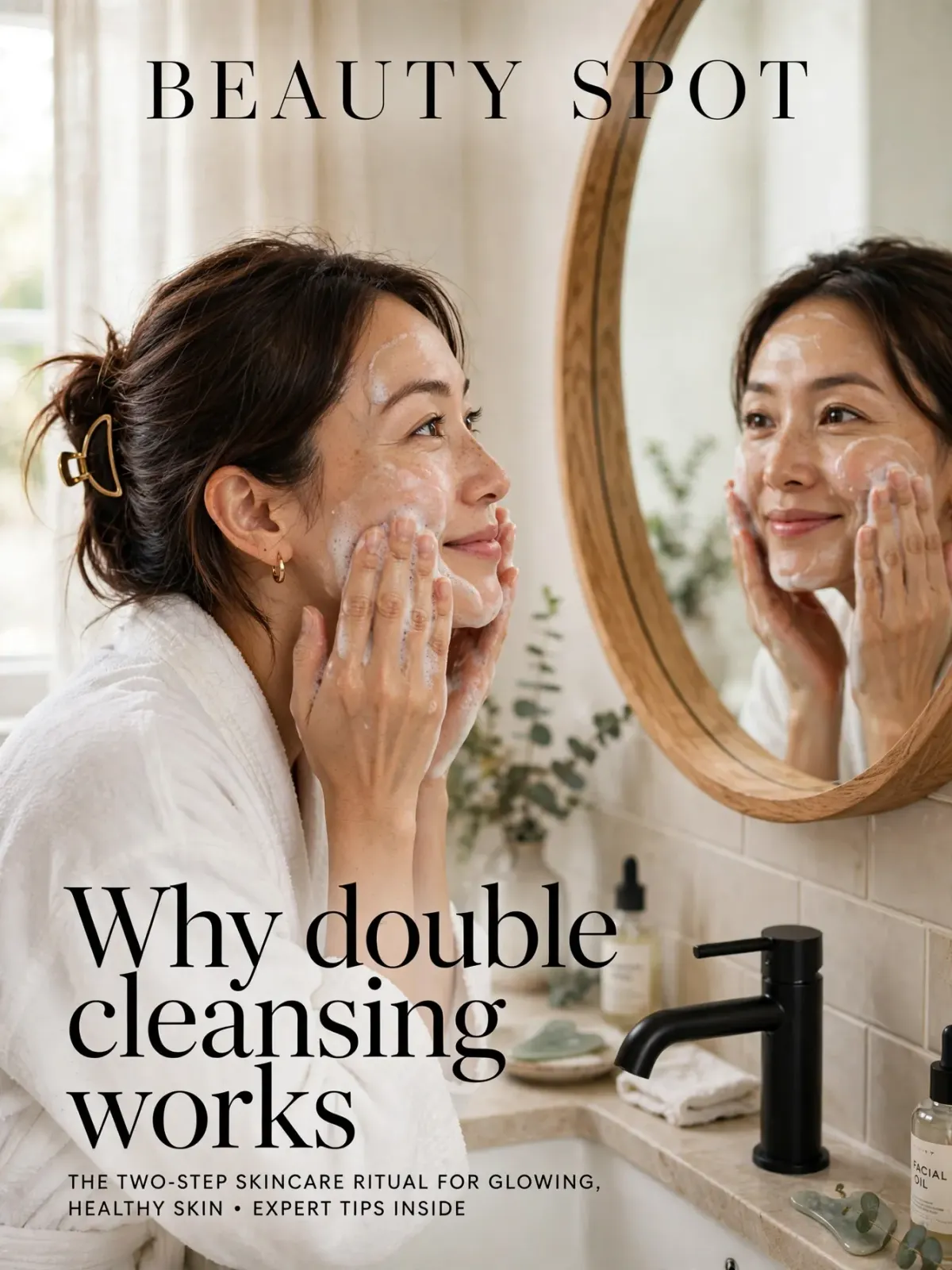
There is a particular kind of glow that cannot be layered on with serum, pressed into the skin with a luxury moisturizer, or manufactured beneath a veil of illuminating makeup. It begins earlier, at the sink, in the quiet removal of the day.
Double cleansing has become one of modern skincare’s most repeated rituals, but its popularity has also flattened its meaning. It is often described as simply “washing your face twice,” as though the technique were an exercise in excess. In reality, a properly designed double cleanse is not repetition. It is sequence. Each cleanse is assigned a different job, and the effectiveness comes from allowing two formulas to remove two different categories of material from the skin.
The first cleanse dismantles the day.
The second cleanse addresses the skin.
That distinction is the reason double cleansing works.
The Skin Is Carrying More Than Dirt
By evening, the face is rarely covered by one uniform layer of debris. It may hold sunscreen polymers, foundation pigments, silicone-based primers, long-wear cosmetics, facial oil, sebum, sweat, airborne particles, hair products, and the residue left by repeated touching throughout the day.
These materials do not all dissolve in the same way.
Water alone is not especially effective at lifting oil-rich substances. This is the familiar chemistry behind the phrase “like dissolves like”: oil-compatible ingredients are generally better at loosening oil-compatible debris. A cleansing oil, balm, or emollient first cleanser can soften and disperse sebum, makeup, and many water-resistant cosmetic films so that they can be emulsified and rinsed away.
The second cleanser then works on what remains—typically perspiration, environmental residue, and traces of the first cleanser—while preparing the skin for the rest of the routine.
This is not about forcing the skin into a state of absolute, squeaking cleanliness. Healthy skin is not meant to feel polished raw. The purpose is to remove accumulated material thoroughly enough that the skin is genuinely clean without repeatedly stripping its protective surface.
Double cleansing is effective because it separates makeup removal from skin cleansing.
When one cleanser is expected to dissolve a full face of makeup, break down water-resistant sunscreen, remove excess sebum, clear particulate matter, and leave the skin comfortable, it may not perform every task equally well. A client may compensate by washing longer, rubbing harder, using hotter water, or choosing a harsher formula. The result can be more friction and greater barrier disruption without necessarily producing a cleaner complexion.
Double cleansing distributes the workload.
The First Cleanse Is a Dissolving Step
The first cleanse is generally the more cosmetic-facing phase of the ritual. Its purpose is to loosen what has adhered to the skin during the day.
Oil cleansers and balms contain lipophilic—or oil-compatible—components that interact with facial oils, waxes, makeup binders, and many sunscreen ingredients. As the product is massaged over dry skin, these materials begin to soften and lift. When water is added, emulsifying ingredients help the oily mixture disperse into a milky fluid that can be rinsed away.
Technique matters here.
A balm that is immediately splashed with water may not have sufficient time to break down long-wear product. A cleansing oil applied in a rushed, aggressive motion may create unnecessary friction around the eyes and mouth. The goal is controlled dissolution, not vigorous scrubbing.
For makeup wearers, mineral-sunscreen users, performers, outdoor professionals, and clients living in warm climates, the first cleanse can be especially meaningful. Texas skin, for example, may move through intense sun exposure, heavy sunscreen application, humidity, perspiration, air-conditioning, and urban particulate exposure in a single day. In cities such as San Antonio, Austin, Dallas, and Houston, an evening cleanse may be removing not only complexion products but layers of reapplied sun protection mixed with oil and sweat.
In that context, double cleansing is less about following a trend and more about matching the cleansing process to the reality of the environment.
The Second Cleanse Is the Treatment-Room Cleanse
Once the cosmetic film has been lifted, the second cleanser can make more direct contact with the skin.
This is where formulation selection becomes more personal. A creamy, low-foaming cleanser may suit dry or sensitized skin. A gentle gel cleanser may feel more appropriate for oilier complexions. A fragrance-free, barrier-conscious formula may be preferable for reactive clients. The best second cleanser is not necessarily the one that produces the most foam; it is the one that removes residual material while leaving the skin comfortable and intact.
Professional facial protocols also treat cleansing as foundational rather than decorative. In the uploaded advanced-treatment material, a double cleanse appears at the beginning of pre-treatment preparation, reinforcing the practical importance of beginning a service with a thoroughly cleansed surface. The broader Skin Mastery curriculum likewise positions cleansing within professional skin-treatment education, although the available file contains only a curriculum placeholder rather than detailed cleansing chemistry.
That distinction is important: the source material supports double cleansing as a preparatory step, but the detailed explanation of oil solubility, emulsification, and surfactant behavior reflects established cosmetic-formulation principles rather than claims contained in the placeholder curriculum.
Where Surfactants Enter the Conversation
Most water-based cleansers rely on surfactants—ingredients with one portion attracted to oil and another attracted to water. This structure allows them to surround oily material and help carry it away during rinsing.
Surfactants are essential to cleansing, but they are not all identical. Formula strength, concentration, pH, supporting emollients, humectants, and the length of time the product remains on the skin all influence how a cleanser feels and performs.
A well-formulated cleanser can remove debris efficiently without leaving the complexion tight. A poorly matched cleanser—or an otherwise good cleanser used too frequently—can remove more surface lipid than the skin comfortably tolerates.
This is why double cleansing should not be interpreted as permission to use two aggressive foaming washes back-to-back. That is not thoughtful sequencing; it is simply repeated detergent exposure.
A sophisticated double cleanse usually creates contrast:
An emollient first step loosens makeup, sunscreen, and sebum.
A gentle second step completes the cleansing process.
The elegance is in the division of labor.
Why Cleaner Skin Can Improve the Rest of the Routine
Skincare does not need perfectly bare skin to function, and cleansing does not magically “open the pores.” Pores do not operate like doors. However, a heavy layer of makeup, sunscreen, oil, and residual cleanser can create an uneven surface and interfere with the sensory application of products that follow.
After a thorough cleanse, toner, essence, serum, and moisturizer can be applied more evenly. The client is also less likely to massage treatment products into a mixture of foundation, oxidized oil, and environmental residue.
In the professional treatment room, adequate cleansing also improves visual and tactile assessment. Once surface cosmetics and debris are removed, the provider can more clearly observe visible dryness, congestion, erythema, textural irregularities, and areas of sensitivity.
That does not mean cleansing diagnoses the skin. It means cleansing reveals the surface more honestly.
The Barrier Is the Boundary
The most important rule of double cleansing is that clean skin should still feel like skin.
Tightness, burning, persistent redness, flaking, and a polished, squeaky sensation are not signs of superior cleansing. They may suggest that the routine is too aggressive, the water is too hot, the massage is too prolonged, or the formulas are inappropriate for the client’s current barrier condition.
Double cleansing may not be necessary every morning. It may not be appropriate after a day with no makeup or water-resistant sunscreen. It may need to be modified during periods of acute sensitivity, following certain procedures, or when a licensed medical professional has prescribed a specific post-treatment routine.
The ritual should respond to what is actually on the skin—not to an inflexible rule.
For some clients, the ideal routine is a nightly cleansing balm followed by a soft gel cleanser. For others, micellar water around the eyes and a single gentle facial cleanse may be sufficient. Very dry or sensitized skin may tolerate a milky first cleanser and a minimal second cleanse only when substantial sunscreen or makeup has been worn.
More cleansing is not automatically better cleansing.
The Professional Advantage
For estheticians, double cleansing is also an opportunity to demonstrate discernment. A provider who automatically applies the same cleanser to every client misses valuable information about formula texture, lifestyle, barrier condition, makeup habits, and environmental exposure.
The consultation should shape the cleanse.
Is the client wearing a long-wear complexion product?
Has sunscreen been reapplied throughout the day?
Does the skin sting when exposed to water?
Is there visible flaking beneath an oily surface?
Has the client recently undergone a treatment requiring modified home care?
In Texas, cleansing and facial treatments fall within the beauty-services framework, but professional practice still requires attention to sanitation, appropriate product use, and the limits of the license. The Beauty Spot legal framework emphasizes that safety, compliance, and understanding the difference between esthetic and medical activity are central to long-term professional credibility.
The double cleanse itself is simple. The intelligence lies in adapting it.
The Final Rinse
Double cleansing works because modern skin is not carrying one kind of residue. It is carrying layers: oil and water, pigment and polymer, perspiration and sunscreen, the visible and the nearly invisible.
The first cleanse releases what the day has deposited.
The second cleanse restores clarity to the surface.
Done well, the process does not leave the face feeling erased. It leaves it quiet—free of the film that no longer belongs there, yet still protected by the barrier that does.
That is the difference between washing twice and cleansing with intention.