Fall Repair Facials
Fall is the season to restore what summer stressed. From barrier repair and hydration to smarter exfoliation and seasonal treatment planning, fall facials help rebalance the skin, refine texture, and prepare the complexion for cooler weather—without overworking it.

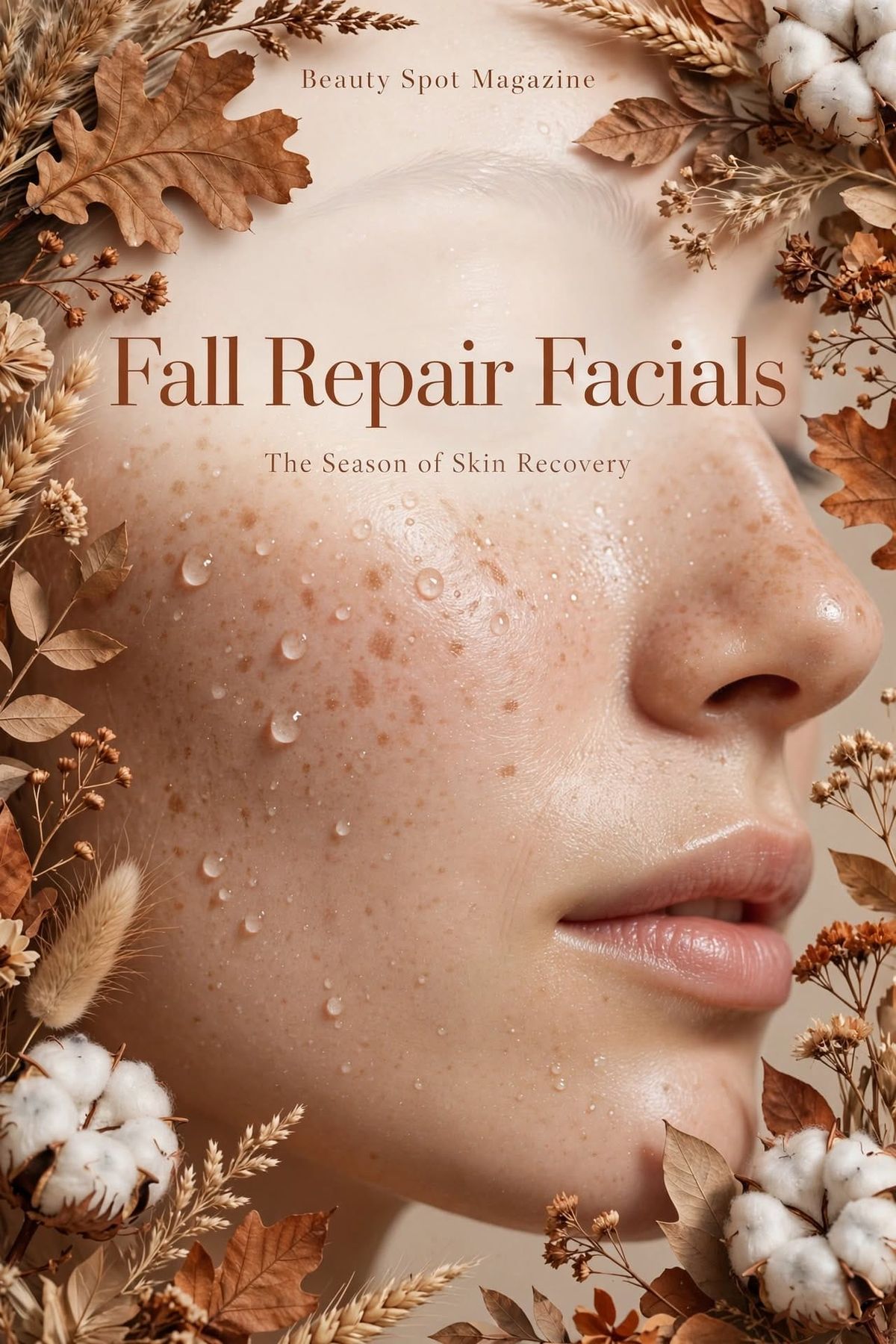
The Season of Skin Recovery
There is a particular moment in early fall when skin begins telling the truth about summer.
The glow that looked effortless in June can start to feel uneven by October. Complexions appear a little rougher. Pigmentation looks more noticeable. Skin that tolerated a lightweight gel moisturizer all summer suddenly feels tight by afternoon. Clients who spent months moving between Texas heat, relentless sun, swimming pools, air-conditioning, travel, sweat, sunscreen and active skincare routines begin walking into treatment rooms saying some version of the same thing: My skin just feels off.
This is where the fall facial becomes more than another seasonal menu special.
Fall is repair season.
Not because skin needs to be punished for summer, stripped down or aggressively resurfaced, but because the smartest transition into cooler weather often begins with restoration. A well-designed fall repair facial recognizes that visible dullness, dehydration, congestion and uneven tone may exist at the same time—and that treating every concern with more exfoliation is rarely sophisticated skin management.
The modern fall facial is quieter than that.
It is strategic.
It looks at the barrier first, inflammation second, hydration third and correction through the lens of what the skin can actually tolerate.
The new luxury in corrective skincare is not how aggressive a treatment feels. It is how intelligently the skin is managed afterward.
Summer Leaves Receipts
Summer skin is exposed to a complicated combination of environmental and behavioral stressors. Ultraviolet exposure remains relevant even when a client is diligent about sunscreen. Heat can increase sweating and oil production. Repeated cleansing may leave some clients feeling stripped. Chlorine, salt water, travel schedules and inconsistent homecare can complicate hydration. Then there is the uniquely modern problem of the overeducated skincare consumer: someone layering acids, retinoids, brightening products, exfoliating toners and scrubs because each product sounds beneficial individually.
By fall, the treatment room can become the place where all of those choices meet.
The skin may look congested while simultaneously feeling dehydrated. Surface texture can appear rough even when the client has been exfoliating constantly. Areas of discoloration that seemed subtle earlier in the year may become more visible as the surrounding summer tan fades. A client may interpret tightness as “dry skin” when the bigger conversation should include barrier condition, product use and environmental exposure.
This is why fall consultations deserve more than a quick glance under the magnifying lamp.
Ask what happened all summer.
Did the client increase retinoid use? Spend weekends at the lake? Start a pigment serum? Travel repeatedly? Develop sensitivity around the nose or mouth? Change sunscreen? Experience breakouts after sweating? Begin exfoliating more frequently because the skin felt congested?
Seasonal skin history creates context.
And context changes the facial.
Barrier Repair Is the Main Character
For years, professional skincare marketed transformation through intensity. Stronger. Deeper. Faster. More peeling. More sensation. More visible downtime.
But the industry is entering a more mature era of correction.
Barrier literacy has become part of advanced esthetic intelligence.
When the skin barrier is functioning well, the complexion is generally better equipped to maintain hydration and tolerate an appropriate professional and homecare routine. When it is compromised or highly sensitized, even beautiful formulations can suddenly sting, flush or feel uncomfortable.
That makes fall an ideal moment to reconsider what “results” actually look like.
Sometimes the most strategic facial is not the one that does the most.
It is the one that stops the cycle of doing too much.
A sophisticated fall repair treatment may prioritize gentle cleansing, conservative exfoliation when appropriate, replenishing hydration, lipid-supportive moisturization, soothing ingredients and thoughtful occlusion. The exact protocol should always respond to the client in front of you rather than a rigid seasonal recipe.
For one person, repair may mean scaling back exfoliation.
For another, it may mean addressing accumulated surface dullness while protecting hydration.
For someone else, the most valuable treatment decision may be postponing an aggressive service entirely.
That level of restraint is not weakness.
It is expertise.
Hydration Is More Complex Than “Adding Water”
The word hydrating appears everywhere in beauty, but professional treatment planning should go deeper.
Clients often assume that a richer moisturizer automatically solves seasonal dryness. Sometimes it helps. Sometimes the real issue is that the routine is missing balance.
Humectants can help attract and hold water within the upper layers of the skin. Emollients improve softness and smoothness by filling spaces between surface cells. Occlusive ingredients can help reduce water loss from the skin. Lipid-supportive ingredients may also become especially relevant when a client’s barrier has been stressed.
The art is in the formulation—and in reading the skin correctly.
A fall facial should leave the complexion feeling comfortable, supple and supported rather than simply coated.
Think plush skin, not greasy skin.
Think bounce, not heaviness.
Think restored luminosity rather than a temporary layer of shine.
That distinction matters in luxury aesthetics because sophisticated clients increasingly understand the difference between immediate cosmetic finish and genuine treatment quality.
What About Exfoliation?
Fall has traditionally been marketed as “peel season,” particularly as strong summer sun begins to ease. But seasonal timing should never replace professional judgment.
Exfoliation can absolutely have a place in fall treatment planning. Removing excess surface buildup can improve tactile smoothness and create a brighter appearance. Certain superficial exfoliation strategies may also complement a carefully designed corrective program.
The danger comes when autumn becomes an excuse for automatic aggression.
A client who spent August combining retinoids, exfoliating acids and physical scrubs may not need a dramatic resurfacing treatment in October. She may need recovery.
Likewise, a client presenting with visible irritation, open lesions or significant sensitivity should not be pushed through an exfoliating protocol simply because the calendar says fall.
In Texas, there is another professional consideration: scope.
Beauty professionals should distinguish clearly between services legally permitted under an esthetic license and procedures that cross into medical treatment. The Beauty Spot Texas legal framework emphasizes that being trained in a procedure does not automatically mean it is legally within an esthetician’s scope. Aggressive peels, deeper tissue alteration and devices functioning in medical territory require particular caution.
Luxury practice is not defined by how close someone can operate to the edge of scope.
It is defined by knowing exactly where that edge is.
The Texas Fall Is Its Own Skin Season
Texas does not always deliver the cinematic autumn of cashmere sweaters, crisp mornings and steadily dropping humidity.
In San Antonio and much of the state, fall can be meteorologically indecisive. Hot afternoons may linger well into the season. Air-conditioning remains part of daily life. Outdoor exposure does not disappear because the retail world has started displaying pumpkins.
That makes the Texas fall facial less about abruptly switching from a summer protocol to a winter protocol and more about managing transition.
Sun protection remains essential.
Hydration may need to increase without becoming overly heavy.
Clients using corrective homecare should be evaluated individually instead of being placed on identical seasonal regimens.
And professionals should resist creating a false sense that cooler weather makes the skin suddenly invulnerable to irritation or environmental exposure.
In Texas, fall repair is a bridge.
It is the moment between summer stress and winter dryness when thoughtful treatment planning can recalibrate the complexion before holiday season begins.
Build the Facial Around the Skin, Not the Marketing Name
A beautiful seasonal service begins with a compelling concept, but the treatment underneath it should remain adaptable.
A fall repair facial might begin with a thorough consultation and gentle double cleanse, followed by careful skin analysis. Exfoliation, if appropriate, should match the client's current condition and professional scope. Treatment can then move toward replenishing hydration and barrier-supportive products, soothing masks, appropriate facial massage or other permitted modalities, followed by moisturizer and broad-spectrum sun protection.
But the real luxury is personalization.
Perhaps one client needs extra attention around dehydrated cheeks.
Another needs a simplified approach because she has been overusing actives.
Another presents with congestion in the T-zone but sensitivity elsewhere.
The best estheticians do not treat those faces identically.
They edit.
They adjust.
They know when to add—and when to remove.
That is where a seasonal facial becomes professional treatment rather than themed skincare.
The Homecare Reset Matters Just as Much
A sixty-minute facial cannot compensate for thirty days of chaotic product use.
Fall is an ideal time for a skincare edit.
Not necessarily a shopping spree.
An edit.
Look at what the client is cleansing with. Determine how many exfoliating products are being used. Identify duplicate active ingredients. Ask how frequently the client uses retinoids and whether irritation is occurring. Review moisturizer texture and sunscreen habits. Decide whether the routine needs more correction or simply more consistency.
For many clients, refinement creates better adherence than complexity.
A cleanser they enjoy using.
One carefully selected corrective product.
A moisturizer appropriate for their skin.
Daily SPF.
Then additional treatment products layered intentionally rather than impulsively.
The luxury consumer does not always need more skincare.
She needs better direction.
And that is one of the strongest opportunities for the modern esthetician: becoming the professional who interprets the shelf instead of simply adding to it.
From Seasonal Facial to Skin-Longevity Strategy
The commercial opportunity is equally important.
Fall repair should not exist as an isolated promotional facial that disappears from the menu in November. It can become the entry point into a larger treatment journey.
A client arrives because her skin feels dehydrated.
The consultation uncovers inconsistent sun protection, excessive exfoliation and concerns about discoloration.
The first appointment restores comfort.
The second begins appropriate corrective work.
Homecare becomes more intentional.
Winter treatment planning is established.
Suddenly, one seasonal facial has become a long-term professional relationship.
That is where intelligent spa business meets excellent esthetics.
Not through pressure.
Through progression.
Clients stay when they understand what is happening to their skin, why a treatment has been selected and what comes next.
Fall Is Not the Season to Attack the Skin
There is something beautifully symbolic about autumn skincare.
The beauty industry spends much of the year obsessed with transformation—new faces, new bodies, new routines, new products, new procedures. Fall offers another possibility.
Restoration.
The goal is not to erase every visible trace of summer in a single appointment.
It is to bring the skin back into balance so that future correction can happen from a stronger foundation.
That might mean hydration before resurfacing.
Barrier support before brightening.
Consistency before complexity.
And sometimes, restraint before intensity.
The most advanced professionals understand that skin does not need to be constantly challenged to prove that a facial worked.
Sometimes the result is quieter.
The complexion feels calm again.
Texture looks more refined.
Makeup sits beautifully.
The client stops complaining that every product suddenly burns.
There is softness where there was tightness, luminosity where there was dullness and confidence where there was confusion.
That is fall repair.
Not a dramatic seasonal overhaul.
A beautifully timed return to equilibrium.