What Your Skin Is Telling You: Acne, Rosacea & the Hormone Connection
Breakouts, flushing and sensitivity deserve more than guesswork. Explore how acne differs from rosacea, where hormonal changes fit from puberty through menopause, and why personal triggers, gentle barrier care, and timely professional evaluation matter in understanding what your skin is telling you.

Beauty Spot Magazine | National Healthy Skin Month | Article 2 of 3
A recurring breakout, an unfamiliar flush, a once-loved serum that suddenly stings: understanding the pattern matters more than reaching for something stronger.
The breakout returns before your period. Your cheeks feel hot long after leaving the patio. A moisturizer that once felt comforting now burns. When skin changes, the temptation is to intensify the routine—or assume hormones explain everything. Neither response necessarily brings you closer to an answer.
In the second installment of Beauty Spot Magazine’s healthy-skin series, the conversation moves beyond correcting appearances to understanding patterns. Acne, rosacea, and irritation can overlap, but they are not interchangeable. Learning to notice the differences can make the next skincare decision more useful—and the next professional consultation more productive.
Similar Bumps, Different Stories
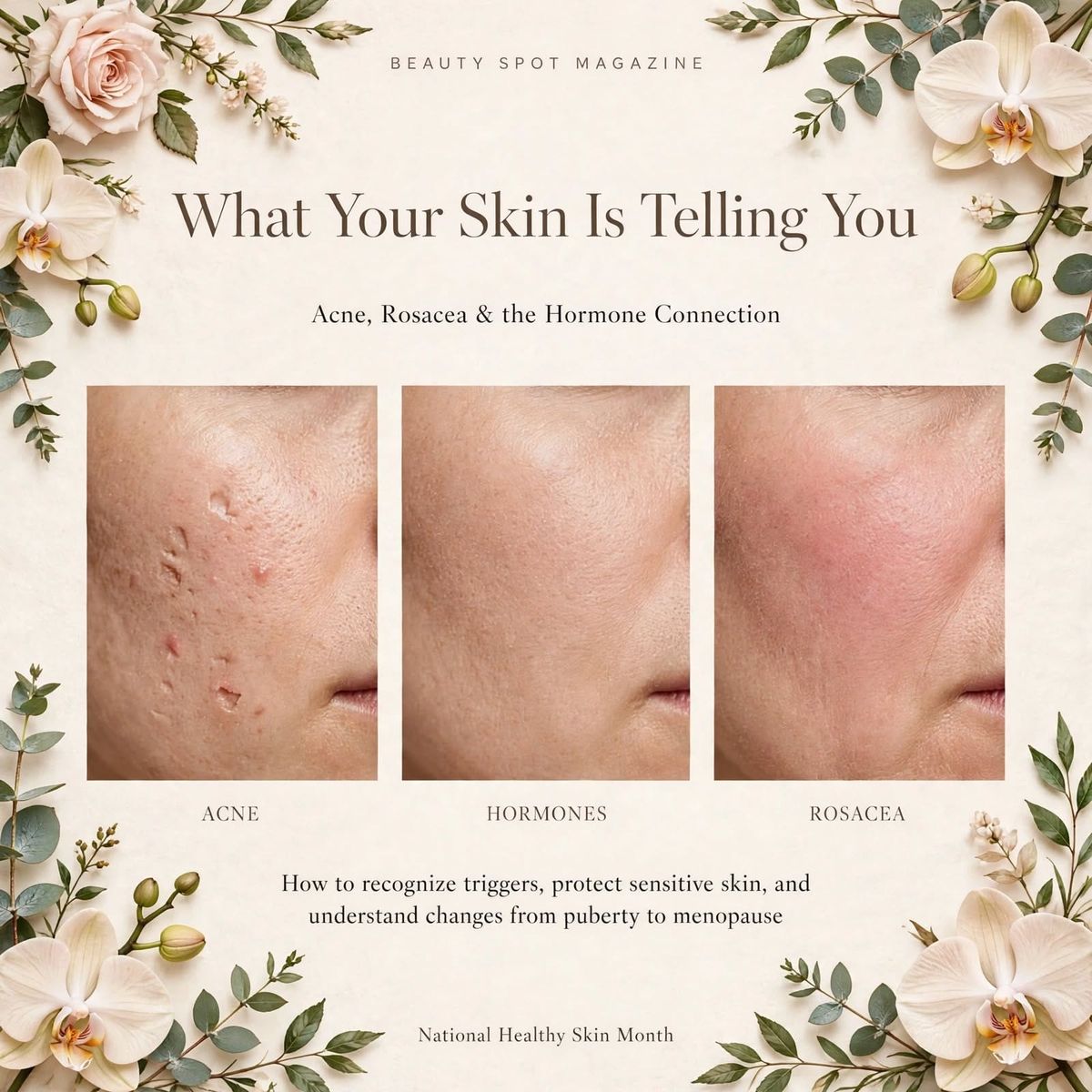
Acne involves clogged follicles, oil, inflammation, and the activity of Cutibacterium acnes, a bacterium normally present on skin. Blackheads and whiteheads—clogged pores called comedones—are important clues. Inflamed bumps, pustules, and deeper, painful nodules may accompany them, affecting the face, chest, or back. Blackheads are not evidence of dirty skin, and aggressive washing does not address the underlying process. [1]
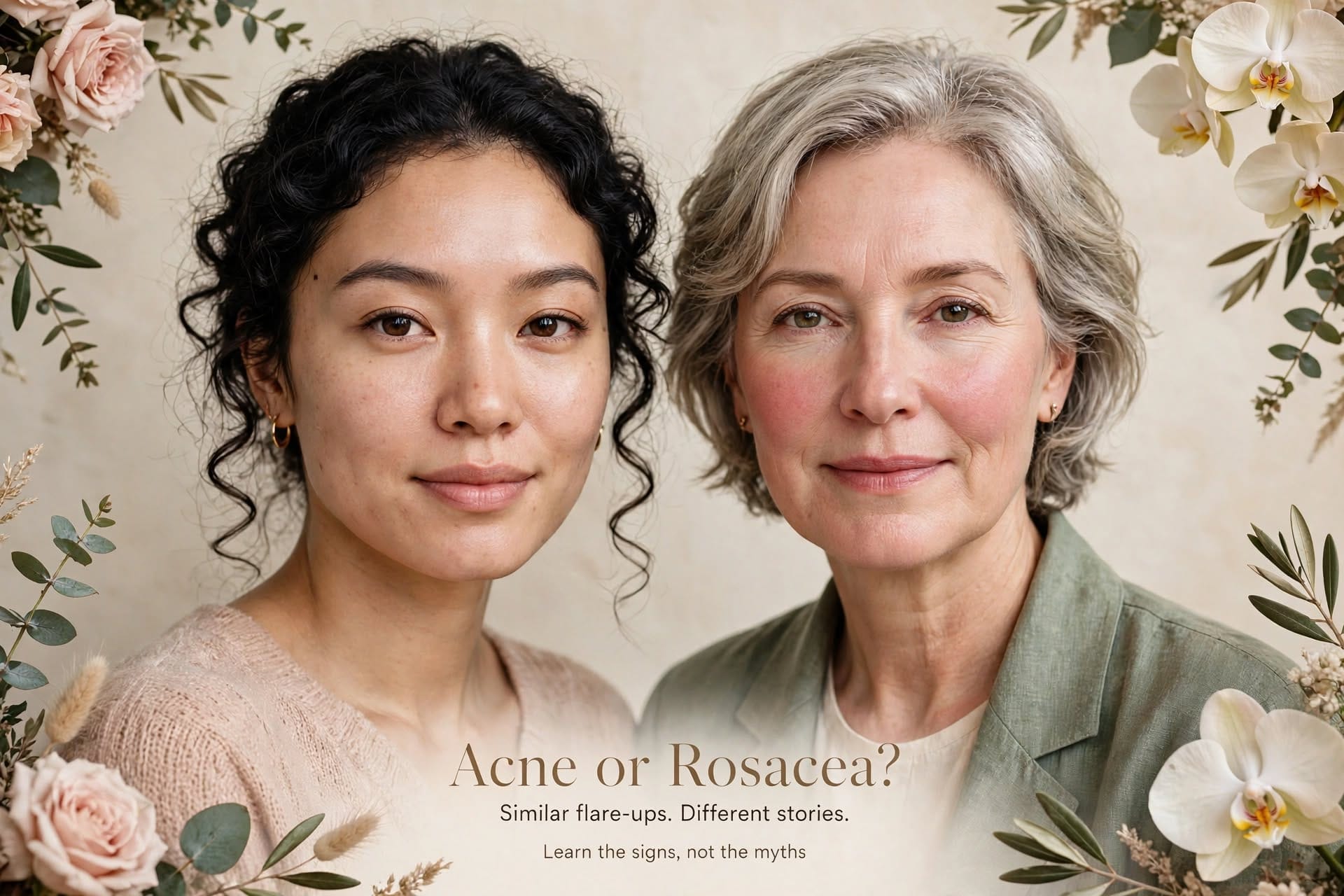
Rosacea often affects the central face, with recurrent flushing, persistent color changes, visible small vessels, burning, or stinging. It can produce acne-like bumps, but comedones are not characteristic. Both conditions can coexist, which helps explain why treating every bump as acne may leave someone increasingly uncomfortable. Rosacea also occurs across skin tones; redness and vessels may be less obvious in deeper complexions. Warmth, sensitivity, texture changes, and symptom history deserve attention—not just whether cheeks look pink. Other conditions, including contact dermatitis, can resemble parts of this picture. [2]
A recurring pattern is useful information. It is not, by itself, a diagnosis.
Hormones Change the Context
During puberty, rising androgen activity stimulates oil glands. These hormones exist in everyone; hormonal influence is not exclusively a women’s health issue. Later, acne may fluctuate around menstruation or after starting or stopping hormonal contraception. Importantly, hormone-responsive acne does not automatically mean hormone levels are abnormal. Skin can respond strongly to ordinary hormonal activity. Location is not a laboratory test, either: jawline breakouts alone do not establish an endocrine disorder. [1,3]
Pregnancy and the postpartum period may also change acne, with improvement for some and worsening for others. Treatment safety changes alongside these transitions. Before conception, during pregnancy, or while breastfeeding, review acne products and prescriptions with a clinician. Retinoids should be avoided during pregnancy; a familiar routine is not automatically appropriate for every life stage. [3,4]
Across perimenopause and menopause, declining estrogen can contribute to dryness and changes in skin resilience, even while breakouts persist. The resulting combination—blemishes on skin that feels increasingly delicate—calls for a different approach from an aggressive teenage acne routine. Hot flashes can cause temporary flushing, but persistent facial symptoms deserve separate assessment rather than automatic attribution to menopause. Rosacea should not be reduced to “hormonal acne” or presumed hormone imbalance. [2,5]
Acne accompanied by irregular periods, increased facial or body hair, or scalp thinning deserves medical discussion. These findings may warrant investigation for androgen excess or conditions such as polycystic ovary syndrome. They do not confirm a diagnosis on their own, and hormone testing is not automatically necessary for every adult breakout. [3,6]
Find Your Triggers Without Blaming Yourself
A trigger can worsen a condition without being its original cause. Rosacea may flare with sunlight, heat, hot drinks, alcohol, spicy foods, or overheating during exercise—but individual responses vary. On a Texas patio, the heat and sun deserve consideration alongside whatever is in the glass. Acne has its own potential aggravators, including friction, pore-clogging products, certain medications, and stress. Neither condition represents poor hygiene or a failure of self-care. [1–3]
A brief diary can record symptoms, menstrual timing when relevant, products, medications, and exposures. Look for repeated patterns rather than assigning blame to one meal or stressful afternoon. Change one nonessential skincare variable at a time, and discuss suspected medication effects with the prescriber rather than stopping treatment yourself. A diary supports a conversation; it does not diagnose food intolerance or justify a restrictive diet. [1–3]
Protect the Barrier Before Chasing the Glow
“Sensitive skin” describes an experience, not a complete diagnosis. Acne-prone skin can also be dry or irritated. A practical foundation is a gentle cleanser, lukewarm water, a fragrance-free moisturizer, and a well-tolerated, broad-spectrum sunscreen with SPF 30 or higher. Reapply sunscreen at least every two hours outdoors and after swimming or sweating, following its directions. Moisturizing is not reserved for dry complexions; it can help make an acne or rosacea treatment plan more tolerable. [1,7]
During a flare, scrubs, strong exfoliants, cleansing brushes, and excessive heat may compound discomfort. Pause newly introduced, irritating nonprescription products and seek guidance about reactions to prescribed treatments. “Natural” does not guarantee nonirritating, and persistent burning is not evidence that a product is working. Nor should every worsening eruption be dismissed as “purging.” Gentle care supports treatment; it does not replace medical management when a condition remains active. [1,7]
When Professional Evaluation Matters
Seek medical evaluation for deep or painful lesions, scarring, persistent flushing, repeated treatment failure, or symptoms affecting confidence and daily life. There is no requirement to wait until the condition becomes severe. Diagnosis changes the treatment conversation: selected acne patients may benefit from hormonal prescriptions, while rosacea care may need to address inflammatory bumps, flushing, visible vessels, or eye involvement. Similar-looking skin does not necessarily need the same medicine. [1–3]
Eye symptoms deserve particular attention. Persistent grittiness, burning, or inflamed eyelids warrants assessment because rosacea can affect the eyes. Eye pain, light sensitivity, or blurred or reduced vision calls for urgent, same-day medical or eye-care assessment—not another facial or a new eye cream. [2,8]
For Texas beauty professionals, an excellent consultation includes knowing when to refer. Supportive cosmetic care must remain within authorized scope and cannot substitute for medical diagnosis or prescription management. Beauty Spot’s Texas practice framework reinforces an important distinction: additional training does not, by itself, expand a professional license.
Your skin is not delivering a moral verdict, and every flare does not demand a new routine. It is offering observations that need context: what changed, what repeats, what hurts, and what has not improved. Healthy skin need not mean uninterrupted clarity. A more useful ambition is comfort, informed care, and timely help—without treating your complexion as something to punish.
Sources & Editorial Notes
Clinical references: 1. NIAMS: Acne; 2. NIAMS: Rosacea; 3. American Academy of Dermatology: Adult acne; 4. AAD: Acne treatment during pregnancy.
5. AAD: Caring for your skin in menopause; 6. American College of Obstetricians and Gynecologists: Polycystic ovary syndrome; 7. AAD: Rosacea skin-care tips; 8. NHS: Rosacea.
This article provides general education, not individualized diagnosis or treatment. It reflects established clinical knowledge available through December 2025. Web search is disabled here, so the linked references and current Texas requirements have not been rechecked live; clinical and regulatory review should precede publication.
#NationalHealthySkinMonth #AcneAwareness #RosaceaAwareness #HormonalSkin #BeautySpotMagazine