The Top 5 Hair Oils for Growth — And What They Can Actually Do
From rosemary and coconut to jojoba, castor and pumpkin seed oil, discover which hair oils truly support healthier growth, stronger strands and better length retention—and which claims deserve a closer look before becoming part of your scalp-care ritual.

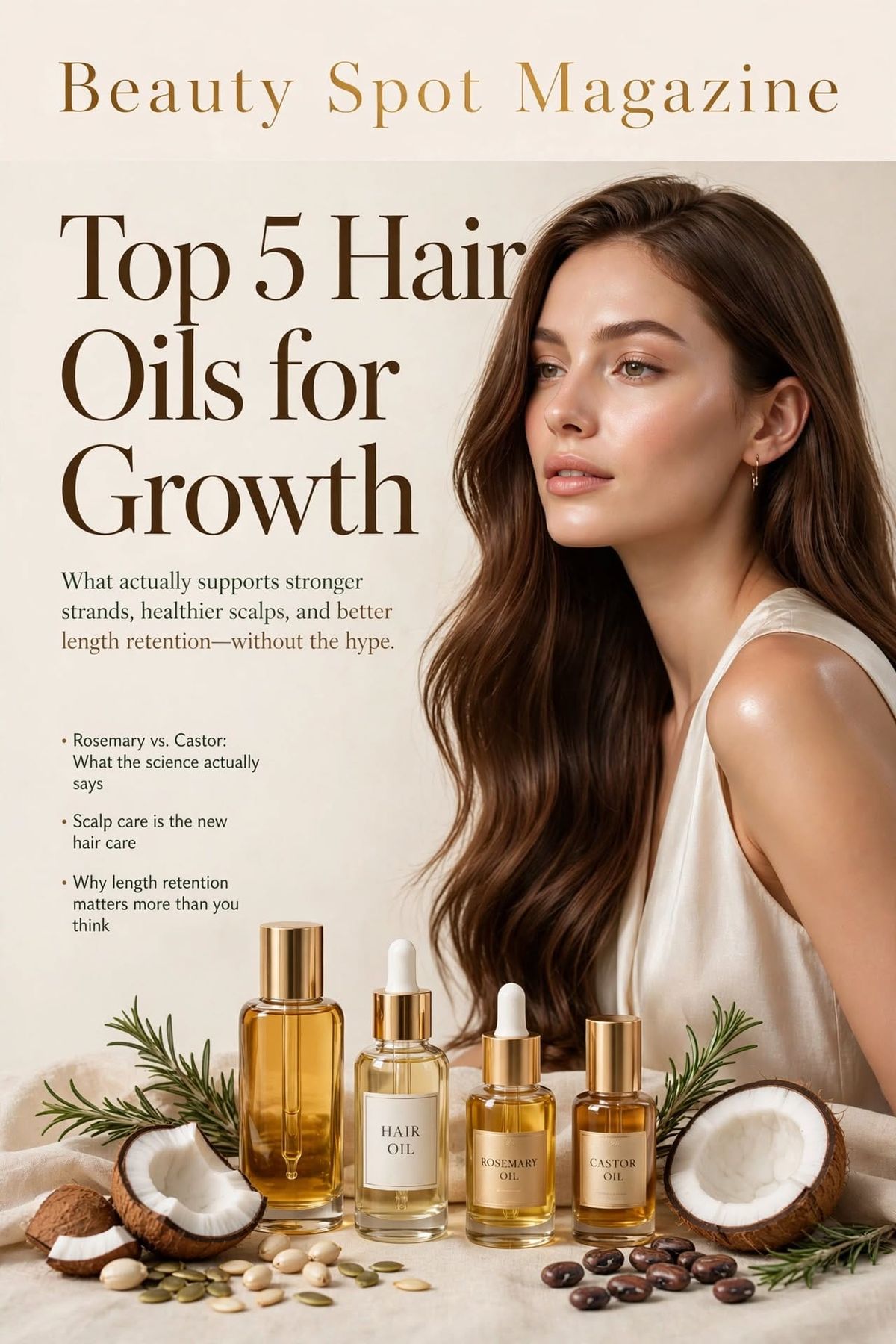
The new hair-growth conversation is less about miracle oiling—and more about scalp intelligence, length retention, and choosing ingredients that actually earn their place in the bottle.
Hair oil has officially moved beyond the beauty ritual.
What once lived primarily in cultural traditions, grandmother remedies, Ayurvedic routines, and wash-day rituals has become one of the most visible categories in modern hair wellness. Scalp serums gleam from luxury shelves. Rosemary oil has become social media royalty. Castor oil continues to command almost legendary status. And increasingly, consumers are treating the scalp with the same ingredient awareness once reserved for facial skincare.
But there is an important distinction Beauty Spot believes the industry needs to make: an oil can support healthier-looking, stronger, better-retained hair without necessarily causing a dormant follicle to begin producing new hair.
That distinction matters.
True hair growth is biological. It is influenced by the hair-growth cycle, genetics, hormones, nutrition, inflammation, medications, illness, age and certain forms of alopecia. Oils can play an important supporting role, particularly when the problem is dryness, friction, breakage or an unhealthy-feeling scalp environment. But significant thinning, sudden shedding, bald patches or a widening part deserve professional medical evaluation rather than months of increasingly elaborate oil cocktails.
So which oils deserve space in a sophisticated growth routine?
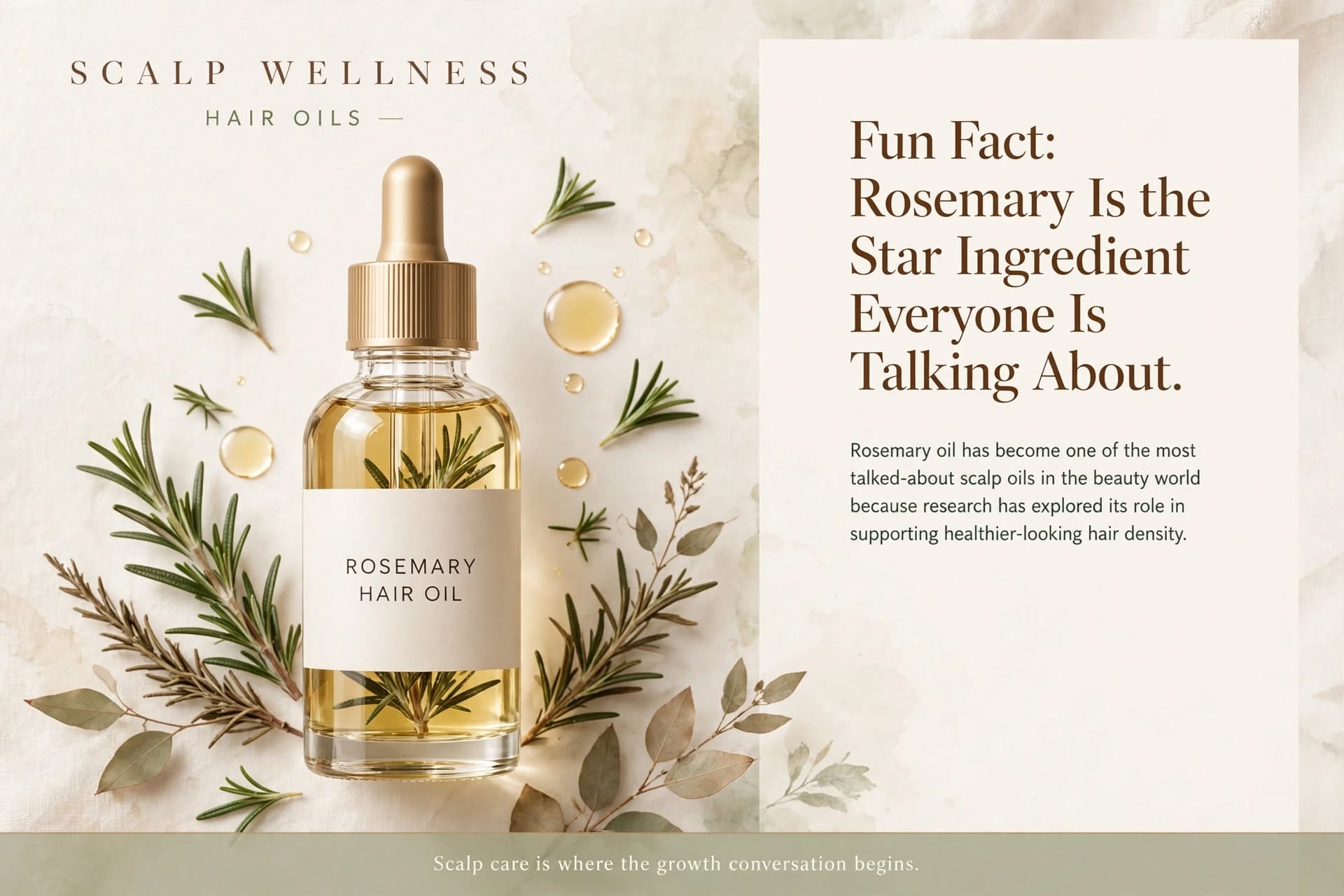
1. Rosemary Oil: The Ingredient That Changed the Conversation
If one botanical has become the face of modern hair-growth culture, it is rosemary.
Unlike many viral hair remedies, rosemary does have limited human research behind its reputation. A frequently discussed small clinical study compared rosemary oil with 2% minoxidil over several months and reported improvement in hair count in both groups. That does not establish rosemary as equivalent to prescription or evidence-based medical hair-loss therapy, and one study should never be transformed into a miracle claim. It does, however, make rosemary considerably more interesting than ingredients supported only by anecdote.
Rosemary is an essential oil, which means it should not be confused with a traditional carrier oil. Applying concentrated essential oil directly to the scalp can provoke irritation or sensitization. For practical beauty use, it belongs in a professionally formulated scalp product or appropriately diluted into a carrier oil.
The most elevated way to think about rosemary is not as an overnight growth hack, but as part of a consistent scalp-care strategy.
Beauty Spot verdict: The strongest candidate on this list when the conversation is specifically about growth—but still an adjunct, not a cure for hair loss.
2. Coconut Oil: The Length-Retention Powerhouse
Coconut oil earns its position for an entirely different reason.
Hair can be growing perfectly well at the follicle while appearing to “never grow” because the ends are breaking almost as quickly as new length is being produced. This is where coconut oil becomes especially compelling.
Its fatty-acid composition, particularly its high lauric-acid content, gives coconut oil unusual affinity for the hair fiber. Research has shown that coconut oil can reduce protein loss from hair under certain conditions, making it particularly relevant for strands experiencing repeated shampooing, heat styling, environmental exposure or mechanical stress.
That does not mean coconut oil accelerates follicular growth.
It means it can help protect the length you have already grown.
For textured, curly, highly porous, chemically treated or breakage-prone hair, that distinction can be transformative. The best growth routine in the world loses its visual impact when the perimeter is constantly snapping.
Use coconut oil strategically as a pre-shampoo treatment or concentrated treatment on mid-lengths and ends rather than automatically saturating every scalp.
Beauty Spot verdict: Exceptional for retention. Sometimes “growing longer hair” begins with simply helping it stop breaking.
3. Jojoba Oil: The Scalp-Care Sophisticate
Technically, jojoba is a liquid wax ester rather than a conventional triglyceride oil, and that chemistry contributes to its elegant cosmetic feel.
Jojoba is lightweight compared with many heavier oils and works beautifully as a carrier for essential-oil blends. It is particularly useful when the goal is lubrication, softness and a more comfortable scalp without creating the dense coating some clients experience with heavier botanical oils.
What jojoba does not have is convincing clinical evidence showing that it independently stimulates new hair growth.
And that is perfectly acceptable.
The beauty industry sometimes makes the mistake of assuming every useful ingredient must perform every possible function. Jojoba’s value is as an elegant support player: improving slip, reducing friction, softening dry-feeling areas and creating a sophisticated base for properly diluted scalp formulations.
For fine hair or consumers who dislike the sensory weight of castor or coconut oil, jojoba can also make an oil ritual significantly more wearable.
Beauty Spot verdict: Think scalp conditioning and formulation elegance—not follicle activation.
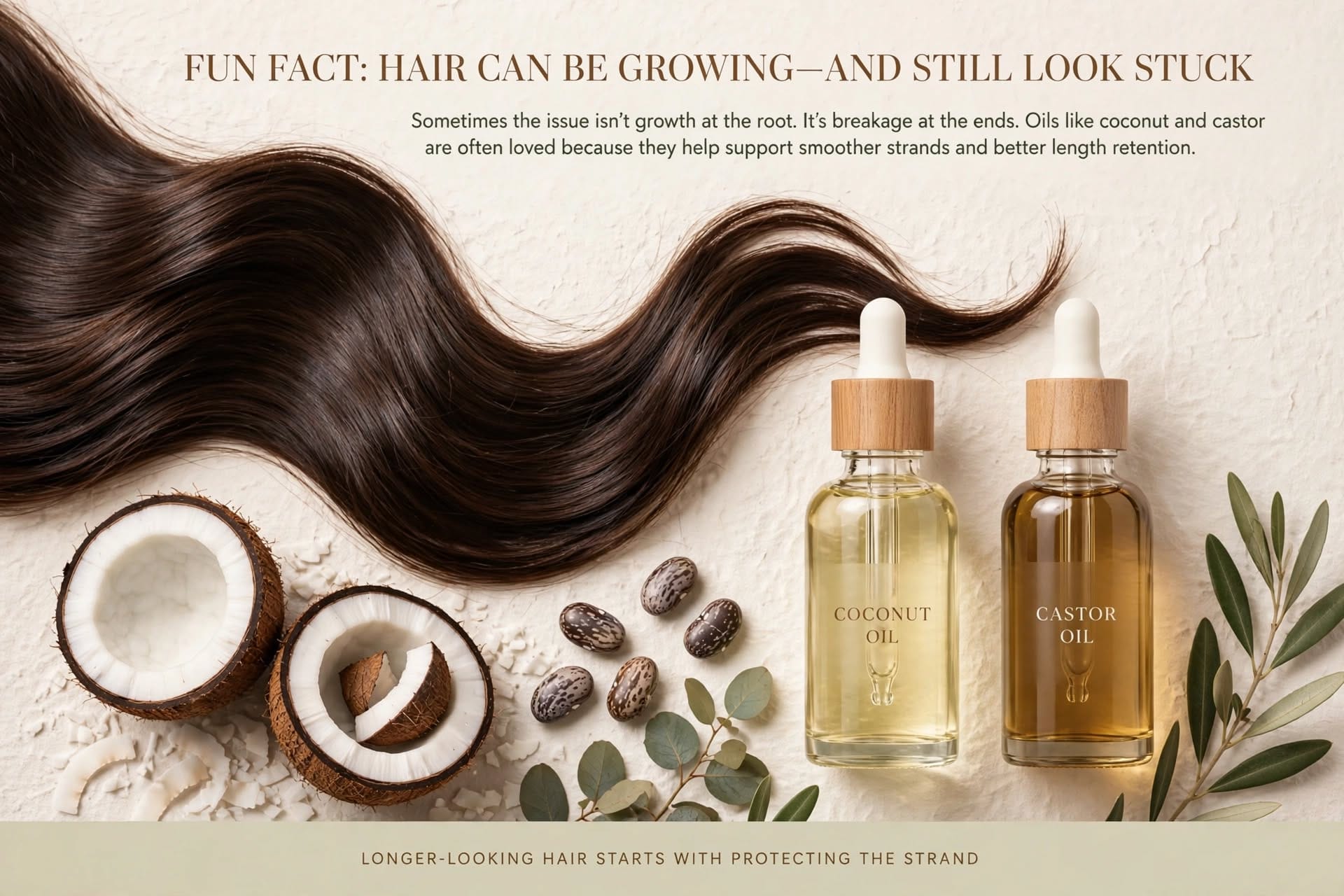
4. Castor Oil: Iconic, Rich and Frequently Overpromised
Few oils carry more hair-growth mythology than castor oil.
Its dense texture gives strands a glossy, substantial finish and makes it especially appealing for edges, brows, protective styles and extremely dry hair. It can reduce friction, add lubrication and visually enhance the appearance of fullness simply because well-conditioned fibers reflect light differently and break less easily.
But the widespread claim that castor oil has been clinically proven to dramatically accelerate hair growth is not supported by strong human evidence.
That does not make castor oil useless. It makes the language around it important.
For dry, coarse or highly textured hair, castor oil may be a powerful sealing product. For fine or buildup-prone scalps, the same richness may feel excessive. And more is not necessarily better: layering heavy oils over an inadequately cleansed scalp can create residue without addressing the underlying reason someone is shedding.
Use it for protection, lubrication and retention—and leave the miracle language behind.
Beauty Spot verdict: Beautiful for sealing and breakage control. Legendary reputation, limited evidence as a true growth stimulant.
5. Pumpkin Seed Oil: The One to Watch
Pumpkin seed oil has become increasingly interesting in hair wellness because pumpkin seed preparations have appeared in research surrounding androgen-related hair thinning.
There is an important catch: some of the better-known human research has examined oral pumpkin seed oil supplementation, not simply massaging cosmetic pumpkin seed oil onto the scalp.
Those are not interchangeable interventions.
That means topical pumpkin seed oil should currently be viewed as promising rather than proven. From a formulation standpoint, however, it remains appealing because it contains fatty acids and antioxidant-associated compounds that can contribute to scalp and hair conditioning.
For modern brands, pumpkin seed oil represents exactly the kind of ingredient that deserves thoughtful formulation and further research—not inflated claims created faster than the science.
Beauty Spot verdict: High-interest botanical with intriguing research surrounding pumpkin seed preparations, but topical growth claims should remain measured.
The Real Secret Is the Scalp Strategy
The most effective oil routine is rarely the one involving the most oil.
A sophisticated scalp routine considers cleansing, buildup, irritation, hair density, strand diameter, chemical services, styling tension, wash frequency and the actual reason the client believes their hair is not growing. A dry scalp and genetic-pattern hair loss are not the same condition. Neither are breakage and shedding.
Apply scalp oils sparingly and consistently rather than flooding the scalp. Essential oils should be professionally formulated or appropriately diluted. Discontinue any product that causes burning, persistent itching, redness or worsening flaking. Those experiencing sudden shedding, smooth bald patches, significant thinning, scalp pain or progressive recession should be directed toward a dermatologist or other appropriately licensed medical professional.
For Texas beauty professionals, that distinction is especially important. Texas law identifies cleansing, stimulating and massaging the scalp—with or without certain cosmetic preparations—as part of regulated barbering and cosmetology services. Professional scalp care should still remain within the practitioner’s actual license and should never be marketed as diagnosing or medically treating alopecia when that falls outside the provider’s authority.
The Beauty Spot Bottom Line
The smartest hair-growth era is not the era of the miracle bottle.
It is the era of scalp literacy.
Rosemary earns attention for its limited but noteworthy human evidence. Coconut oil excels at protecting the hair fiber. Jojoba offers lightweight scalp conditioning. Castor oil remains a rich tool for lubrication and retention. Pumpkin seed oil is an ingredient worth watching as research evolves.
And perhaps the most important shift is this: beauty professionals and consumers are finally beginning to recognize that longer-looking hair can come from several different victories—supporting the scalp, protecting the fiber, minimizing breakage and knowing when hair loss requires medical expertise.
Growth happens at the follicle. Length is protected on the strand. Great hair care understands both.