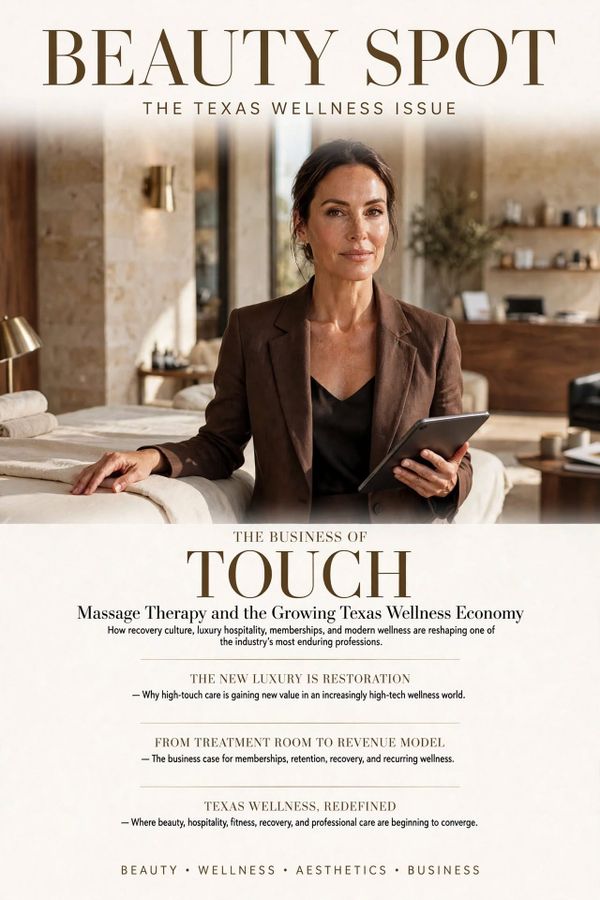
The Business of Touch: Inside The Texas’ Massage Therapy Industry
Inside Texas’ massage therapy industry, touch is more than a service—it is a business built on trust, skill, stamina, and strategy. From luxury positioning to memberships, recovery culture, and compliance, massage is evolving into one of wellness’ most valuable human experiences.

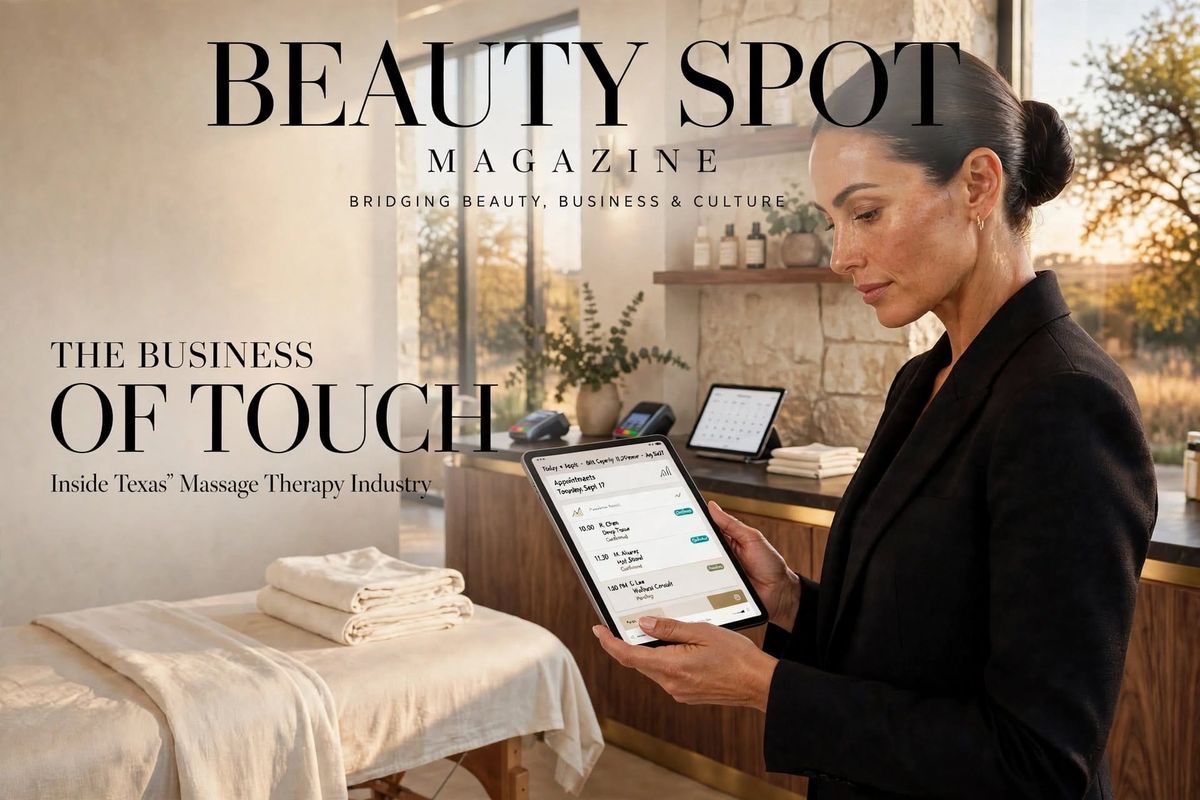
In a state built on scale, speed, ambition, and reinvention, one of the most valuable services in modern wellness may also be one of the most human: touch.
There is a particular silence inside a massage treatment room. The door closes. The phone disappears. Conversation softens. The lighting lowers, the pace changes, and for the next fifty, eighty, or ninety minutes, a client who may have spent an entire week answering emails, carrying children, managing employees, sitting in traffic, training at the gym, recovering from travel or simply holding too much tension is asked to do something increasingly rare in American life: become still. That moment may feel intimate and effortless to the client. Economically, however, it represents a sophisticated service business built around time, labor, trust, physical skill, emotional intelligence, regulation, scheduling, hospitality and the ability of one professional body to sustain another. That is the real business of massage therapy in Texas.
Massage has long been placed in the softer corner of the beauty and wellness world, treated as an indulgence beside the more visibly transformative businesses of injectables, corrective skin, body contouring and cosmetic medicine. That framing is beginning to feel outdated. Across the modern wellness economy, recovery has become aspirational. Nervous-system language has entered mainstream beauty culture. Athletes talk openly about mobility and recovery. Executives invest in longevity. Luxury hotels build entire wellness identities around sleep, restoration and personalized bodywork. Fitness clients no longer view recovery as something that happens after the “real” work; increasingly, recovery is part of the work. In that environment, massage therapy occupies a powerful intersection between hospitality, personal care and professional wellness.
Texas gives that intersection unusual scale. Houston, Dallas–Fort Worth, Austin and San Antonio each contain distinct massage economies, while affluent suburban markets, resort destinations, fitness communities and rapidly expanding residential corridors create additional demand. A therapist working near a luxury hotel in downtown Austin may serve a completely different client from a practitioner operating beside a training facility in North San Antonio, a destination spa in the Hill Country or a private wellness studio in a Dallas suburb. The technique may share the same professional foundation. The business proposition does not.
That distinction matters because massage is not merely a treatment category. It is a capacity business.
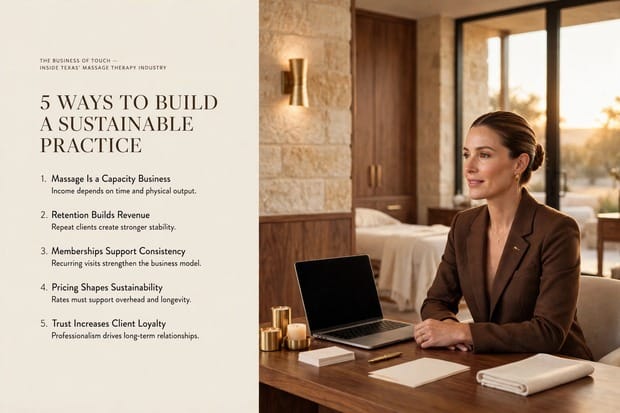
Unlike retail, digital education or many beauty services that can layer technology into the appointment, traditional massage remains closely connected to the therapist’s own available hours and physical output. There are only so many sessions one practitioner can safely perform in a day. A fully booked calendar can therefore create the illusion of extraordinary business success while hiding a fragile economic model underneath it. If every dollar depends on the therapist physically performing another session, growth eventually collides with anatomy.
This is one of the industry’s least glamorous truths.
A massage therapist may become so successful that demand exceeds what the body can sustainably deliver. Hands fatigue. Wrists become irritated. Shoulders tighten. Backs protest. Emotional energy can become depleted. The practitioner whose profession is built around helping other people feel better must simultaneously protect the instrument through which the service is delivered: themselves.
That changes the business conversation completely.
The strongest massage businesses are not necessarily those performing the highest number of appointments. They are the ones designing the highest-value relationship between time, expertise, client retention and practitioner longevity.
From Appointment Book to Brand
The old model of massage entrepreneurship was relatively straightforward: become technically proficient, rent a room, attract clients and fill the schedule. The modern premium market demands more.
Clients increasingly experience a massage business as a brand before they ever experience the massage itself. They encounter the booking platform. They read the service descriptions. They examine photographs. They assess reviews. They notice whether intake feels professional. They determine whether the room communicates clinical precision, quiet luxury, holistic warmth, athletic recovery or generic spa culture.
Every one of those details begins positioning the practitioner.
A $75 massage and a $225 massage may both occupy sixty minutes on a calendar. The difference in perceived value is rarely explained by technique alone. Location matters. Specialization matters. Environment matters. demand matters. The quality of consultation matters. Reputation matters. Hospitality matters. Convenience matters. Most importantly, confidence matters.
Luxury clients are not simply purchasing pressure applied to muscle. They are purchasing the belief that they are in capable hands.
That is why the most compelling massage brands often move away from encyclopedic menus filled with ten variations of essentially the same service. Instead, they build clear treatment identities: restorative bodywork, athletic recovery, prenatal support where appropriately trained, customized therapeutic sessions, relaxation rituals, luxury couples experiences or integrated wellness programs.
Specialization creates language. Language creates positioning. Positioning influences price.
And price, in this industry, is not a superficial issue.
Underpricing massage can become a sustainability problem. When a therapist prices primarily according to what feels “fair” rather than what supports payroll, rent, linens, laundry, booking technology, merchant fees, insurance, products, education, marketing, taxes, downtime and physical capacity, the result is often a business that looks busy but remains financially anxious.
A full book is not automatically a profitable business.
The Membership Question
Few business models have shaped contemporary massage more visibly than membership.
The appeal is obvious. Clients receive a predictable wellness rhythm; businesses receive recurring revenue and improved retention. But a strong membership should create a relationship, not simply a discount.
This distinction separates premium recurring-revenue strategy from perpetual promotion.
A well-designed massage membership may provide priority booking, preferred scheduling windows, thoughtful enhancements, access to selected wellness experiences or structured monthly care. The objective is to make consistency feel valuable. If membership is built entirely around lowering the price, the business risks training its most loyal clients to value the service less precisely because they purchase it more often.
Premium loyalty works differently.
The client should feel increasingly known.
Their preferences become familiar. Their scheduling patterns are understood. Their experience becomes more personalized. Their relationship to the business grows deeper. This is where massage holds an extraordinary commercial advantage: the service is inherently relational.
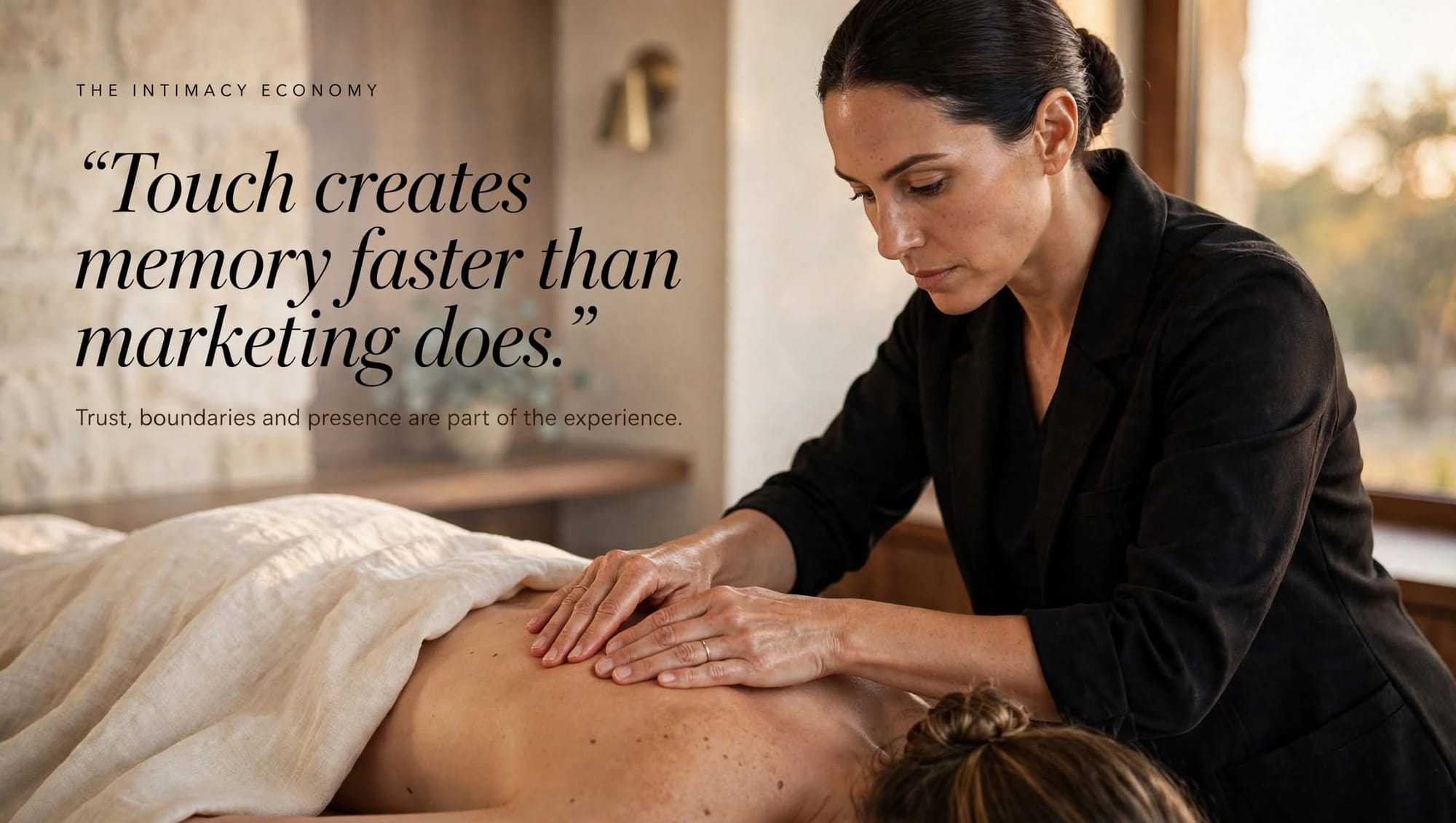
A client may forget the exact fragrance used in the room or the playlist playing quietly behind them, but they remember whether they felt rushed. They remember whether boundaries were respected. They remember whether their preferences were heard. They remember whether the practitioner seemed present.
Touch creates memory faster than marketing does.
Where Massage Meets the New Wellness Economy
The next chapter of massage therapy may be less about massage standing alone and more about massage becoming part of a broader recovery ecosystem.
Imagine the modern Texas wellness consumer: strength training several times a week, using advanced skincare, monitoring nutrition, experimenting with cold exposure or sauna, traveling frequently, considering longevity medicine, working long hours and becoming more conscious of sleep, stress and recovery. Massage naturally sits inside that lifestyle.
This creates legitimate collaboration opportunities among massage therapists, fitness professionals, spas, hotels and appropriately licensed healthcare or wellness providers—provided every professional remains within their own legal role. One Evolve Texas Medical Group collaboration document, for example, identifies massage therapists alongside dietitians and wellness educators as potential complementary professionals within a larger fitness-and-wellness ecosystem, while explicitly keeping clinical services under licensed medical providers.
That distinction is important.
The wellness industry has developed a vocabulary that can easily drift toward medical implication: lymphatic work, pain relief, injury recovery, inflammation, detoxification, post-procedure care, structural correction. Marketing language must never outrun professional authority. Massage therapists can be highly educated and extraordinarily skilled while still operating within a defined professional scope. Collaboration does not erase those boundaries.
Beauty Spot’s broader Texas compliance framework makes the same point in another regulated beauty profession: what someone has learned and what their license legally authorizes are not automatically identical things.
For massage businesses, that principle should become part of brand intelligence rather than something viewed only through the language of restriction.
Trust is luxury.
Clear consent is luxury.
Professional boundaries are luxury.
Accurate claims are luxury.
A sophisticated client should never have to wonder whether the person touching their body understands the professional responsibility that comes with that access.
The Intimacy Economy
There is another reason massage requires a level of business intelligence unlike many beauty services: this is an industry built around physical vulnerability.
Clients undress to their comfort level. Their bodies may carry scars, surgical history, pregnancy changes, aging, disability, athletic strain, weight changes and insecurities they do not discuss casually. They may arrive grieving, stressed, exhausted or overstimulated. Some want conversation; others desperately want silence.
The therapist is therefore delivering two services simultaneously: technical bodywork and psychological safety.
That does not make the therapist a mental-health professional. It means the client experience is shaped by emotional awareness.
The best practitioners understand that boundaries are not cold. They are part of hospitality.
Explaining draping clearly, obtaining appropriate consent, discussing areas to avoid, respecting changes in comfort, maintaining professional language and creating transparent expectations all strengthen the experience. In a luxury setting, these practices should never feel bureaucratic. They should feel seamless.
The client should feel cared for without feeling managed.
The Texas Opportunity
Texas remains a particularly compelling environment for wellness entrepreneurship because the market is not one market. It is many.
San Antonio’s military, medical, hospitality and growing luxury-wellness communities create one profile. Austin’s tech, fitness and destination-hospitality culture creates another. Dallas–Fort Worth supports affluent suburban wellness, luxury retail and executive clientele. Houston combines enormous healthcare infrastructure, global business, athletics and a sprawling premium consumer market. Hill Country destinations create opportunities around retreat culture, weddings, tourism and restorative travel.
The opportunity for massage entrepreneurs is therefore not simply to “get more clients.”
It is to decide which client they are built to serve.
That choice influences location, scheduling, service duration, price, partnerships, room design, retail, membership structure and communication.
A practitioner serving competitive athletes may build around recovery scheduling and fitness partnerships. A luxury therapist may focus on privacy, concierge-level service and extended appointments. A resort-based professional may build expertise around destination wellness. A neighborhood studio may become deeply embedded in the rhythms of local families and professionals.
There is no single winning model.
There is, however, one increasingly clear dividing line: businesses that understand their position and businesses that simply sell appointments.
What Comes Next
Massage therapy is moving into an era in which the word wellness is becoming both more valuable and more crowded. Consumers can buy recovery boots, massage guns, smart mattresses, infrared experiences, supplements, apps, wearable technology and endless forms of optimization.
Technology will continue to enter the recovery category.
But technology cannot fully duplicate human touch.
That may ultimately become massage therapy’s greatest advantage.
The industry should not compete with machines by trying to become more mechanical. Its opportunity is to become more expert, more intentional and more human.
The future belongs to massage professionals who understand anatomy and atmosphere, technique and economics, boundaries and branding. It belongs to owners who build businesses that do not exhaust the very practitioners responsible for delivering the experience. It belongs to brands that understand recurring revenue without cheapening expertise, collaboration without crossing professional lines, and luxury without confusing luxury with decoration.
Because the most powerful thing happening inside the treatment room is not simply muscle manipulation.
It is trust being transferred through touch.
And in an increasingly automated world, that may become one of the most valuable currencies the wellness industry has left.
Beauty Spot Editorial Note: Massage therapy is a regulated profession in Texas. Because the source library available for this article did not contain the current massage-specific Texas statute or rule set, this feature intentionally avoids presenting precise licensing-hour, renewal, establishment or continuing-education requirements as current legal guidance. Texas professionals and business owners should verify current massage-therapy requirements directly with the Texas Department of Licensing and Regulation before making compliance or scope-of-practice decisions.