Should You Pop Pimples? Why Professional Extractions Are Safer
Popping pimples can worsen inflammation, damage the skin barrier, and leave behind dark marks or scars. Discover why professional extractions are safer—and when a blemish should be left alone. Read more in Beauty Spot Magazine.

There is a particular kind of temptation that arrives with a visible blemish. It catches the light in the bathroom mirror, disrupts an otherwise polished complexion, and begins to feel less like a temporary skin event and more like a personal emergency. The instinct is immediate: press, squeeze, clear it, move on.
But skin rarely responds well to impatience.
What looks like a simple clogged pore is often a much more delicate structure involving oil, compacted skin cells, inflammation, bacteria, and surrounding tissue that is already under pressure. When that structure is handled aggressively, especially with bare fingers, long nails, unclean tools, or repeated squeezing, the result may be more redness, prolonged inflammation, post-inflammatory discoloration, a damaged barrier, or a scar that remains long after the original blemish would have healed.
The real question is not whether a pimple can be popped.
It is whether it should be.
In most cases, the safest answer is no—at least not at home.
A Blemish Is Not Always Ready to Be Extracted
The word “pimple” is used casually, but acne lesions are not all the same. A small blackhead, a closed comedone, a superficial pustule, and a deep cystic lesion require very different judgment. Some are formed close enough to the surface that a trained professional may be able to remove the blockage with controlled pressure. Others sit deeper in the skin and should not be manipulated at all.
This distinction matters because extraction is not simply squeezing until something comes out. A professional first evaluates whether the lesion is appropriate to extract, whether the skin is inflamed, whether the area is compromised, and whether the service remains within the provider’s professional scope.
Active cystic acne and open lesions, for example, are identified as contraindications in the advanced treatment materials used by Evolve Texas Medical Group. That framing is important because inflamed, cystic, or broken skin should not be treated like a routine clogged pore. It may require time, barrier support, acne management, or referral to a medical professional rather than forceful manipulation.
A trained provider knows that restraint is sometimes the most advanced technique in the room.
The mark left behind is often not caused by the blemish itself. It is caused by the way the blemish was handled.
What Actually Happens When You Squeeze
When fingers press around a blemish, the pressure does not move in only one direction. While some debris may rise toward the surface, some may be pushed sideways or deeper into surrounding tissue. The pore wall may become irritated or damaged. The area may swell. Blood vessels may break. Inflammation may intensify.
This is especially likely when the lesion is not ready, when the skin has not been properly softened, or when the person continues squeezing after the first attempt fails.
The skin is the body’s protective covering and first line of defense. Once that barrier is disrupted, the area becomes more vulnerable to irritation and contamination. Professional cosmetology education emphasizes the importance of recognizing healthy skin, maintaining infection-control awareness, and referring conditions that fall outside a beauty professional’s role rather than attempting to diagnose or treat disease.
At home, however, most people are not working under ideal conditions. They may touch the face after using a phone, opening a door, applying makeup, or handling hair products. They may use fingernails that create tiny tears. They may wipe the area with alcohol, overapply acids, or cover it with makeup immediately afterward. The original blemish then becomes part inflammation, part barrier injury, and part self-inflicted wound.
This is how a two-day breakout becomes a two-month dark mark.
For clients with deeper skin tones, that risk deserves particular attention. Melanin-rich skin may develop persistent post-inflammatory hyperpigmentation after irritation, picking, or trauma. The blemish may flatten, yet the discoloration remains visible for weeks or months. In those cases, the urge to create instant clarity can produce a much longer cosmetic concern.
Why Professional Extractions Are Different
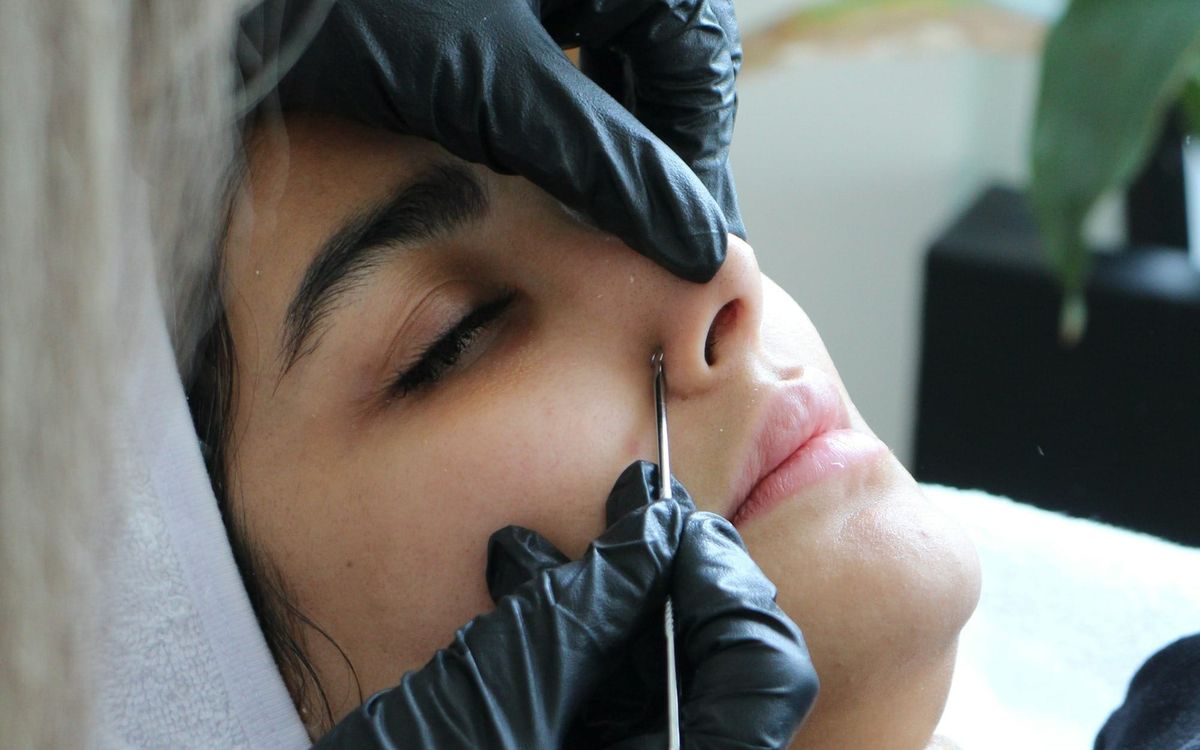
Professional extractions are safer not because professionals possess stronger hands, but because they use better judgment.
The extraction begins with assessment. A licensed esthetician examines the skin, identifies the type of congestion, and determines whether the lesion can be addressed without excessive force. The skin may be cleansed and prepared as part of a facial protocol. The provider works under controlled lighting with sanitized hands, appropriate protective measures, and properly disinfected implements.
Pressure is precise rather than emotional.
That difference is larger than it sounds. At home, people often squeeze until the blemish appears empty. A trained provider is watching the tissue response. If the skin resists, becomes overly red, begins to bleed, or shows signs that the material is not releasing easily, the extraction should stop. The goal is not to win a battle against the pore. The goal is to preserve the surrounding skin.
Professional settings also bring sanitation standards that are difficult to replicate casually at a bathroom mirror. Beauty Spot’s Texas legal framework emphasizes that the treatment room is a regulated professional environment where sanitation, disinfection, equipment safety, documentation, and scope awareness matter.
For Texas estheticians, that professionalism is not optional branding. It is part of lawful, responsible practice. A license does not permit a provider to perform every technique they have seen online or learned informally. The provider must remain within the permitted scope of the license and avoid crossing into medical treatment, tissue alteration, or services that exceed superficial esthetic care.
A responsible esthetician therefore understands both how to extract and when not to extract.
The Danger of Treating Every Bump the Same
One of the biggest mistakes in home acne care is assuming that every raised spot contains something that needs to be released.
Some blemishes are inflamed papules with no accessible opening. Some are deep nodules. Some may resemble acne but are actually irritation, folliculitis, dermatitis, or another condition requiring medical evaluation. Attempting to squeeze these areas can worsen discomfort and delay appropriate care.
Beauty professionals should not diagnose illness, and consumers should be cautious about self-diagnosing every eruption as a clogged pore. Standard professional education reinforces the importance of recognizing conditions that require referral to a healthcare professional.
This is where professional skin analysis becomes valuable. An experienced esthetician can identify whether the skin appears congested, inflamed, sensitized, dehydrated, over-exfoliated, or compromised. They can also recognize when the pattern is outside routine facial care and should be evaluated by a dermatologist or other qualified medical provider.
That referral is not a failure of esthetics. It is evidence of professional maturity.
What to Do Instead of Popping
When a blemish appears, the most effective response is usually quieter than the instinctive one.
Cleanse gently. Avoid scrubbing. Keep hands away from the area. Pause aggressive exfoliation if the skin is already irritated. Use acne products only as directed, rather than layering multiple acids, drying agents, and spot treatments in a single night. A hydrocolloid patch may help protect a superficial blemish from touching and picking, although it will not correct every type of lesion.
Most importantly, do not perform a full bathroom-counter procedure on inflamed skin.
The modern skincare consumer is often surrounded by high-performance products, devices, extraction videos, and clinical language. That access can create confidence without context. A product may be effective, but the wrong combination, frequency, or timing can impair the barrier. A tool may be professional, but ownership does not create professional judgment.
Skin responds best to consistency, not escalation.
For recurring blackheads, persistent congestion, frequent breakouts, painful acne, or dark marks that continue to accumulate, schedule a consultation with a licensed esthetician or medical provider. A professional plan may include appropriate facials, carefully selected exfoliation, home-care adjustments, barrier support, acne-focused products, or referral for medical management.
The objective is not simply to empty today’s pore. It is to understand why the congestion keeps returning.
What a Safe Extraction Appointment Should Feel Like
A professional extraction should never feel reckless, hurried, or punishing. The provider should examine the skin, explain what can and cannot be addressed, and avoid promising to clear every pore in one appointment. There should be visible attention to sanitation and client comfort.
The service should also be adapted to the condition of the skin that day. A client who has recently used strong retinoids, over-exfoliated, experienced sun exposure, or picked at the area may not be an ideal candidate for aggressive extractions. Compromised skin may require calming and recovery before corrective work begins.
This is the difference between a treatment-based mindset and a results-at-any-cost mindset.
Luxury skin care is not defined by how much is done. It is defined by how intelligently the skin is handled.
The Texas Professional Perspective
In Texas, estheticians are expected to practice within the boundaries of their license and maintain proper sanitation and safety standards. The Beauty Spot Texas legal framework emphasizes that training and legal scope are not interchangeable: being taught a technique does not automatically mean it may be performed in every setting or on every client.
That distinction is especially important when acne is severe, cystic, infected-looking, bleeding, or associated with open lesions. Those presentations should not be marketed as routine extraction opportunities. They may require medical assessment, prescription treatment, or coordinated care.
Texas professionals build trust not by attempting everything, but by knowing where esthetic care ends and medical care begins.
For the client, this creates a better standard of beauty care. The safest provider is not the person who promises to extract every bump. It is the person who protects the skin, respects inflammation, documents concerns, maintains sanitation, and refers appropriately when the condition exceeds cosmetic care.
The Final Verdict
Should you pop pimples?
The occasional blemish may look simple, but the consequences of mishandling it are not. At-home popping introduces uncontrolled pressure, contamination risk, inflammation, barrier damage, discoloration, and scarring. Professional extraction offers a safer environment because it combines skin analysis, sanitation, appropriate preparation, controlled technique, and the judgment to stop when a lesion should not be disturbed.
The most sophisticated approach to acne is not aggression.
It is discernment.
Clear skin is rarely created through one dramatic moment in the mirror. It is built through consistent care, appropriate treatment, barrier respect, professional guidance, and the patience to let skin heal without turning every imperfection into an emergency.
Sometimes the best thing you can do for a blemish is leave it alone.
And sometimes the smartest beauty investment is placing it in trained hands.