Nourish Your Skin, Nurture Yourself: The Everyday Wellness Edit
National Healthy Skin Month is a reminder that healthy skin is not perfect skin. Explore how nutrition, sleep, stress, movement, daily care, and skin awareness work together—plus when changes deserve professional attention and why confidence should never depend on a flawless complexion.


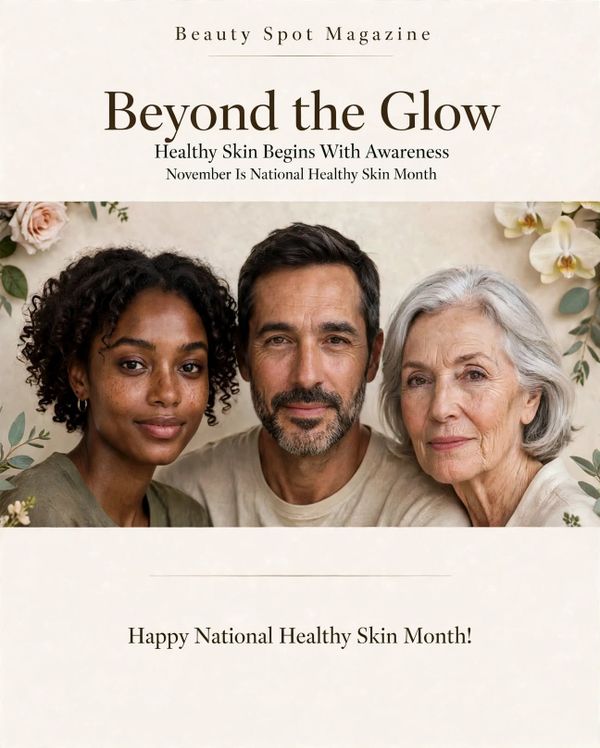
National Healthy Skin Month is not simply a celebration of glowing complexions. It is an opportunity to bring greater awareness to healthy skin, compromised skin, changing skin and the signs that deserve closer attention.
That distinction matters.
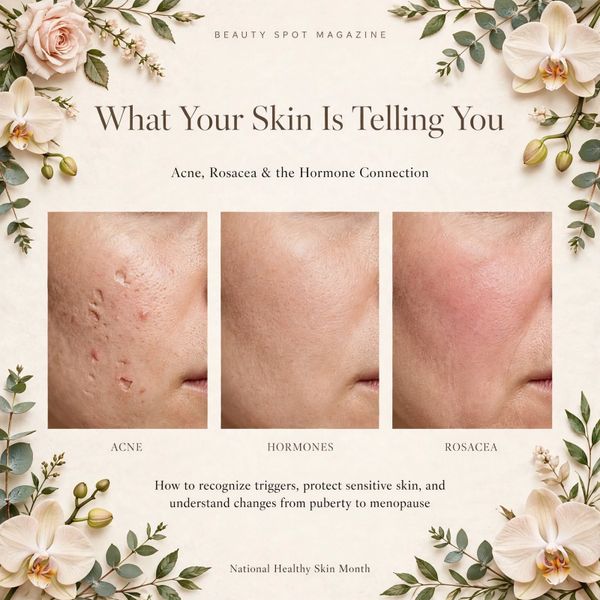
Healthy skin is not always poreless, perfectly even or free from texture. And skin that is struggling may not always announce itself dramatically. Persistent irritation, unexplained rashes, lesions that do not heal, sudden changes in pigmentation, chronic inflammation, severe acne, excessive dryness, recurring flares or other visible changes can all be reasons to pay closer attention and, when appropriate, seek evaluation from a qualified medical professional.
The purpose of awareness is not to make people anxious about every blemish. It is to help people become more familiar with their own skin, recognize when something feels different and understand that skin health exists on a spectrum.
There is also a particular kind of pressure attached to modern skin care: the idea that if we eat correctly enough, sleep deeply enough, drink enough water, manage stress beautifully, exercise consistently and purchase the right products, our skin should eventually become flawless.
But skin does not work that way.
Skin is living tissue influenced by genetics, hormones, age, environment, inflammation, medications, health conditions, sun exposure, products, behaviors and time. It can be cared for, supported and protected. It can often become calmer, stronger and more resilient. What it cannot always become is “perfect”—and that distinction may be one of the healthiest conversations we can have during National Healthy Skin Month.
The everyday wellness edit is not about turning your life into another treatment protocol. It is about creating conditions that support the skin while nurturing the person living inside it.
Healthy skin is not a reward for perfect behavior. It is something we learn to understand, protect and pay attention to.
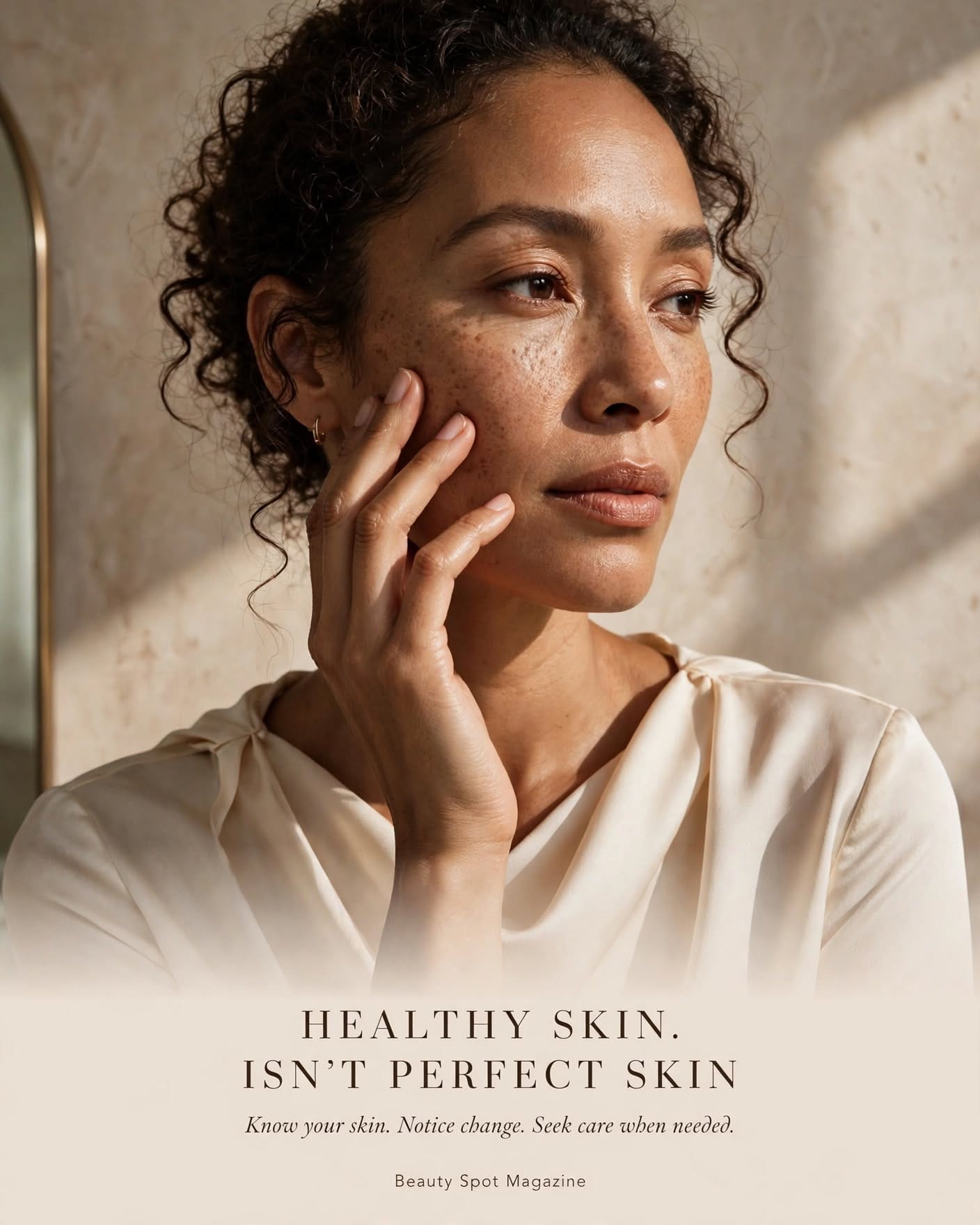
Knowing Your Skin Is Part of Skin Health
One of the most valuable habits during National Healthy Skin Month has nothing to do with buying another product.
It is observation.
Most people know when their skin feels normal for them. They know their usual level of dryness, oiliness, sensitivity, pigmentation and breakouts. That familiarity creates a personal baseline—and a baseline makes change easier to notice.
A new spot that continues to evolve. A sore that refuses to heal. A mole that appears to change. A rash that keeps returning. Sudden or severe inflammation. Persistent itching, pain or bleeding. These are not issues a facial, exfoliant or serum should be expected to diagnose.
That is an important boundary for both consumers and beauty professionals.
Estheticians can observe, educate, support the skin barrier and recommend appropriate cosmetic care within their professional scope. They do not diagnose disease. When something appears suspicious, persistent or outside normal cosmetic concerns, referral to a physician or dermatologist is an act of professionalism—not a failure of treatment.
In Texas, that distinction is especially important for licensed beauty professionals working in increasingly advanced treatment environments. A sophisticated provider understands that expertise includes knowing when not to treat and when a client needs medical evaluation.
National Healthy Skin Month gives the industry an opportunity to normalize that conversation.
Skin awareness should include both what looks healthy and what deserves attention.
The Nutrition Conversation Needs More Nuance
The relationship between food and skin is real, but it is frequently oversold.
Skin needs nutrients to function normally. Protein supplies amino acids used throughout the body. Essential fatty acids contribute to healthy cell membranes and barrier function. Vitamins and minerals participate in processes related to normal tissue maintenance, antioxidant defense and repair. A varied eating pattern built around vegetables, fruit, protein sources, whole grains or other fiber-rich carbohydrates, healthy fats and adequate overall nutrition supports general health—and skin benefits from being part of a well-nourished body.
That is very different from claiming that a smoothie can “clear acne,” collagen powder can erase wrinkles or eliminating one food will cure every inflammatory skin condition.
Nutrition may influence skin, but it is rarely the only variable.
For the everyday reader, a more intelligent approach is refreshingly simple: build meals around nourishment rather than restriction. Include colorful produce because variety matters. Eat enough protein. Include healthy fats. Choose fiber-rich foods regularly. Drink fluids according to your body, activity level and environment. Enjoy food without making every breakout a referendum on what you ate yesterday.
There are situations in which dietary patterns may be worth discussing with a physician or registered dietitian, particularly when someone notices repeatable associations with a condition or has a diagnosed nutritional deficiency. But aggressive elimination diets undertaken solely in pursuit of clear skin can create a different kind of wellness problem.
Food should support health. It should not become punishment for having pores.
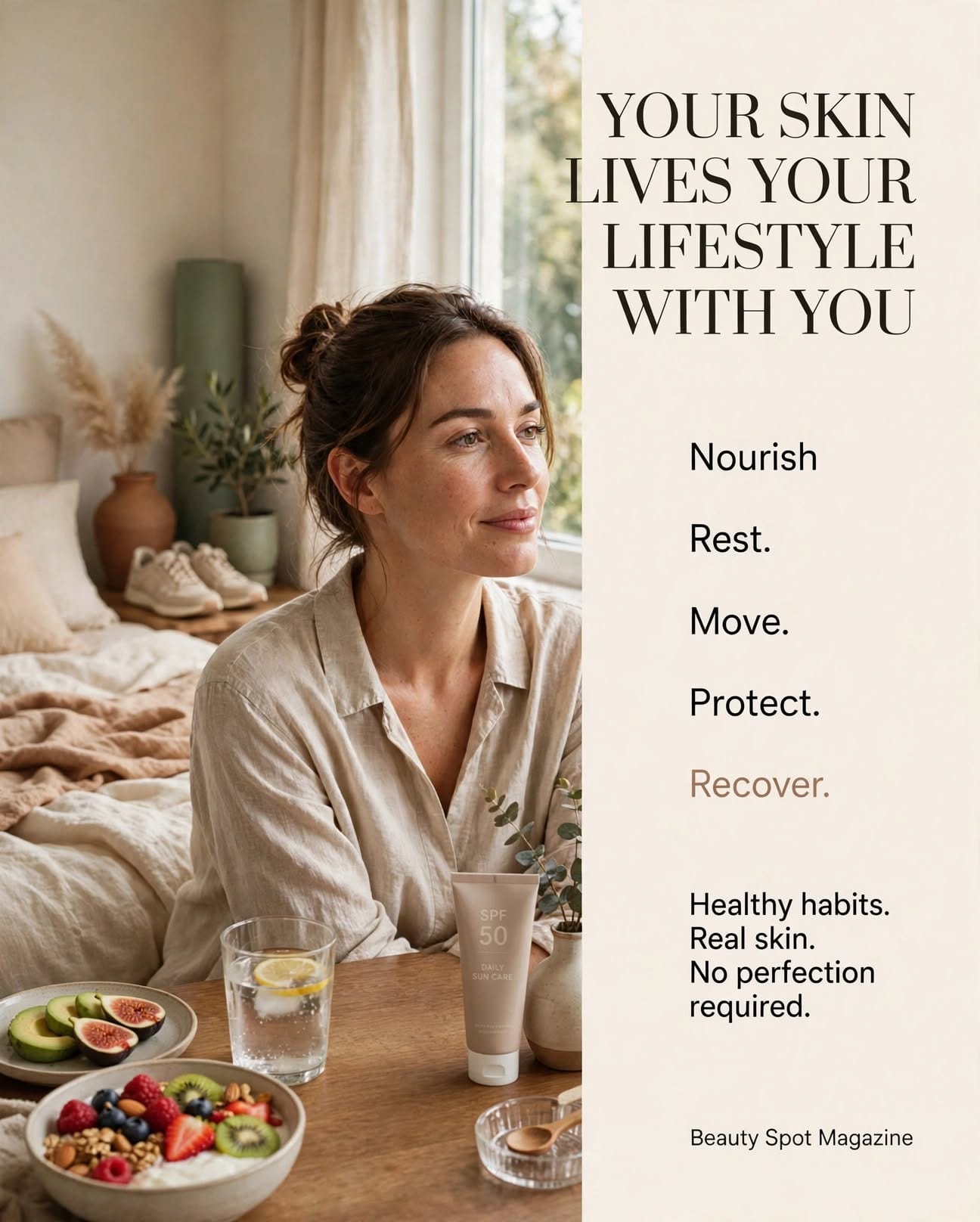
Sleep Is Quiet Skin Care
Some of the most important beauty rituals happen with the lights off.
Sleep supports normal recovery processes throughout the body. Anyone who has lived through several restless nights has seen the cosmetic consequences: a complexion that appears duller, eyes that look more fatigued and a face that simply seems less refreshed.
The solution is not a complicated “beauty sleep” routine. It is consistency.
Try protecting a realistic sleep window. Dim the stimulation before bed. Put some distance between yourself and the endless scroll. Keep the room comfortable. If your schedule is chaotic, work toward repeatability before perfection.
No serum compensates fully for chronic exhaustion.
For beauty professionals, this matters during consultation. When a client suddenly believes every sign of fatigue is evidence that their skin-care routine has failed, we have an opportunity to widen the conversation. Sometimes the complexion is not asking for another active ingredient. Sometimes the person needs rest.
Stress Can Show Up on the Face—But Stress Is Not a Moral Failure
“Reduce your stress” may be one of the least useful wellness instructions ever given to a busy person.
Stress is not something most people simply choose to stop experiencing. Work changes. Relationships strain. Children need care. Businesses demand attention. Money becomes tight. Hormones shift. Grief arrives. Life happens.
And yes, stress can intersect with skin. For some people, periods of emotional or physical stress seem to accompany flares of acne, eczema, psoriasis, picking behaviors or other concerns. But telling someone that their skin problem exists because they are “too stressed” can become another form of blame.
A better question is: Where can we create recovery?
Recovery might look like ten quiet minutes before the household wakes. It might be therapy. Prayer. Journaling. Sitting outside. Calling someone trustworthy. Taking a lunch break instead of eating over a laptop. Booking the facial not because you need to be “fixed,” but because being cared for matters too.
The goal is not a stress-free life.
The goal is a life with places to recover.
Movement Is Part of the Wellness Picture, Not a Beauty Punishment
Movement supports cardiovascular health, metabolic health, mobility, mood and overall well-being. Those benefits matter far beyond appearance.
The beauty industry does itself no favors when exercise becomes another instruction to shrink, sculpt or correct the body. The more sustainable frame is movement as circulation, strength, energy and emotional release.
Walk. Dance. Stretch. Lift. Swim. Garden. Take the stairs when it makes sense. Choose movement that fits your body and your season of life.
And because this is skin care, remember the practical details: cleanse sweaty skin gently when needed, change out of damp clothing, avoid excessive friction and continue sun protection during outdoor activity.
In Texas, where bright sun and heat can remain part of daily life well beyond the traditional summer calendar, outdoor wellness should include thoughtful UV protection. Broad-spectrum sunscreen, shade, hats, protective clothing and sensible timing belong in the same conversation as hydration and movement.
Sun protection is not anti-aging vanity. It is basic skin stewardship.
The Routine Does Not Need to Be Complicated
Healthy-skin culture has developed a strange affection for excess.
Ten steps. Seven actives. Three exfoliants. A new device. Another acid. Another trend.
Yet many people would benefit from doing less, more consistently.
A dependable everyday routine can often begin with three priorities: cleanse appropriately, moisturize according to the skin’s needs and protect against ultraviolet exposure. Targeted products can then be added for specific concerns when appropriate.
The magic is not in having the largest shelf.
It is in choosing products the skin tolerates and using them long enough to evaluate what they are actually doing.
When irritation appears, more treatment is not always the answer. Burning, persistent redness, excessive peeling and chronic tightness should not be normalized as proof that a product is “working.” High-performance skin care still has to respect barrier function.
And National Healthy Skin Month is a good time to say this clearly: if a concern is persistent, painful, rapidly changing or simply does not look or feel like your usual skin, stop trying to out-treat it with cosmetics and seek appropriate professional evaluation.
For licensed beauty professionals, this is where good education becomes luxury service. A sophisticated consultation does not overwhelm the client with product. It organizes the noise. It identifies priorities. It understands when to treat, when to simplify and when a condition should be referred to a medical professional.
When Skin Becomes Emotional
Visible skin conditions do not stay neatly on the surface.
Acne can influence whether someone wants to attend an event without makeup. Hyperpigmentation can make a person feel as though everyone is looking at the mark before they see the face. Eczema may affect clothing choices, sleep and physical comfort. Hair loss, scarring, rosacea or chronic inflammatory conditions can change the way someone photographs themselves, dates, works, socializes or allows themselves to be seen.
That emotional impact deserves more respect than a casual “it’s only skin.”
It is skin—but skin is also part of identity, expression and first impressions.
This is where the beauty professional’s language becomes critically important.
A client should never leave a treatment room believing she is dirty because she has acne, undisciplined because she has pigmentation, aging incorrectly because she has lines or failing at wellness because her skin is inflamed.
Corrective care and compassion can coexist.
We can pursue healthier function without treating a human face like a collection of defects.
Confidence does not have to wait for clearance.
A person is allowed to feel beautiful during treatment, during a flare, during healing and during seasons when the skin simply refuses to cooperate.
And awareness itself can be empowering. Knowing when a change is likely cosmetic, when it deserves professional observation and when it warrants medical attention gives people something far more valuable than perfection: informed confidence.
The New Luxury Is Consistency—and Awareness
The most sophisticated wellness routine may be the one that can survive ordinary life.
Eat nourishing food most of the time.
Sleep as consistently as your circumstances allow.
Move your body in ways that feel sustainable.
Protect your skin from the sun.
Use products deliberately instead of compulsively.
Give stress somewhere to go.
Pay attention to changes in your skin.
And seek qualified professional or medical care when a concern needs more than self-care.
Leave room for pleasure, too.
The beautiful meal with friends counts. The afternoon walk counts. The night you chose sleep instead of another hour online counts. The facial that made you feel cared for counts. The appointment you made because a skin change did not seem normal counts. The morning you looked in the mirror, saw the breakout and decided to go live your life anyway absolutely counts.
National Healthy Skin Month does not need to become another month of optimization.
It can become a month of awareness.
Awareness of what healthy skin can look and feel like.
Awareness that healthy does not mean flawless.
Awareness that persistent changes deserve attention.
Awareness that cosmetic professionals and medical professionals have different but valuable roles in skin health.
Awareness that early observation, thoughtful care and appropriate referral matter.
And awareness that confidence should never depend on whether your skin happens to be behaving beautifully that day.
Perhaps the better beauty goal is not flawless skin at all.
Perhaps it is resilient skin, informed care, realistic habits, greater awareness and the kind of confidence that does not disappear every time the complexion changes.
That is nourishment.
That is self-care.
And that is what National Healthy Skin Month should help us remember.
#NationalHealthySkinMonth #SkinNutrition #SelfCare #HealthySkinHabits #BeautySpotMagazine