Massage Is More Than Relaxation
Beauty Spot Magazine explores the modern massage therapist beyond relaxation—where anatomy, skilled touch, client trust and wellness intelligence meet. Discover how today’s therapists are redefining bodywork while building sophisticated, sustainable careers in beauty and wellness.


Understanding the Modern Massage Therapist
There is a particular image the beauty and wellness industry has spent decades attaching to massage: dim lighting, warm towels, aromatic oils, a hushed treatment room and an hour devoted almost entirely to escape. It is an appealing image—and certainly part of the experience—but it has also flattened one of the wellness industry's most tactile professions into something far simpler than the work itself. The modern massage therapist is not merely the person waiting at the end of a stressful week to help a client “relax.” Massage professionals work with the body in a way that requires anatomical knowledge, observation, communication, physical skill, professional boundaries and an extraordinary sensitivity to what a client is experiencing beneath the surface. In the new wellness economy, where consumers increasingly speak about recovery, mobility, stress management, longevity and feeling better in their bodies, massage deserves to be understood not as an indulgent extra, but as its own highly skilled professional discipline.
Walk into a sophisticated spa today and the difference is immediately apparent. The conversation around massage is changing. A client may arrive because her shoulders feel perpetually elevated after eight hours behind a laptop. Another may spend most of his workday standing. A beauty professional may be experiencing hand, wrist, neck or lower-back fatigue after years behind the treatment table. A frequent traveler may simply feel physically depleted. Another client may not be able to identify a particular complaint at all; she only knows that her body never seems to fully settle. These clients are not necessarily seeking the same massage, and the modern therapist's work begins long before hands touch skin. It begins with listening.
That distinction matters because massage therapy is ultimately an individualized experience. The therapist observes posture, asks questions, considers areas of sensitivity, discusses pressure preferences and learns what the client wants from the session. Just as a sophisticated esthetician does not look at every face and perform exactly the same facial, an experienced massage therapist does not need to approach every body through an identical sequence. The quality of the experience is found in responsiveness—the ability to adapt technique, pressure, pacing and attention according to the client standing in front of them.
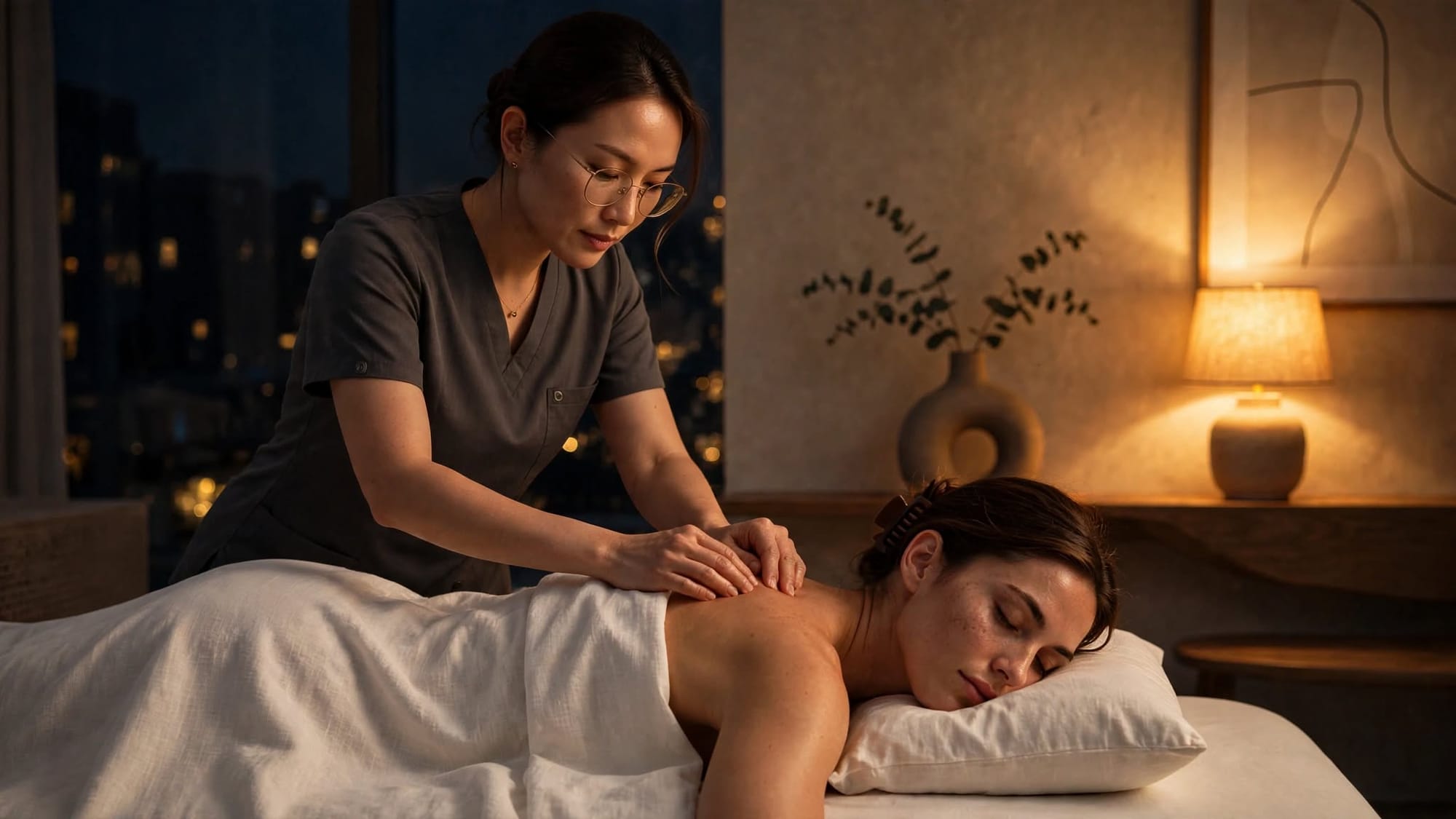
The Body Is Not a Collection of Isolated Parts
One reason massage is so easily underestimated is that the experience can feel beautifully simple from the client's side of the table. The client closes her eyes. The therapist begins working. What is less visible is the anatomical framework behind competent touch.
Professional beauty education recognizes that massage interacts with multiple body systems. Foundational anatomy education identifies the muscular system as the network responsible for movement and for supporting and shaping the skeletal system. It also recognizes the circulatory, lymphatic, integumentary and nervous systems as essential areas of understanding when professionals perform services involving massage or manipulation of the body.
That knowledge changes the meaning of touch.
A shoulder is not simply “tight.” It is part of a larger arrangement of muscles, joints, connective structures, habitual movement patterns and nervous-system input. The neck does not exist independently of the shoulders, upper back and posture. The hands that ache at the end of a workday belong to arms connected to shoulders attached to a body that has repeated the same professional motions hundreds or thousands of times.
For the massage therapist, this means that technical skill involves more than learning where to place the hands. It requires understanding how the body is organized and recognizing that the client's experience in one area may exist within a larger physical pattern.
This is also where the public conversation around massage needs greater sophistication. Massage therapists should not be expected to diagnose disease simply because they understand anatomy, nor should wellness marketing turn every massage technique into a medical promise. Professional credibility actually becomes stronger when those boundaries remain clear. Massage therapy can occupy an important place in a client's wellness routine without pretending to replace physicians, physical therapists or other healthcare professionals.
The evolution of massage is not about making massage sound more medical. It is about recognizing how much professional knowledge can exist inside skilled, responsible touch.
The Nervous System Has Entered the Wellness Conversation
Perhaps no cultural shift has changed massage's public identity more than the modern obsession with stress.
“Regulate your nervous system” has become part of contemporary wellness language. Consumers encounter the phrase in conversations about sleep, meditation, breathwork, fitness, recovery and mental well-being. Social media has amplified the terminology—sometimes with scientific care and sometimes with far more certainty than the evidence deserves—but beneath the trend sits a genuine cultural reality: people increasingly recognize that wellness is not exclusively about how the body looks.
They care about how the body feels.
That shift is particularly relevant to massage because the nervous system coordinates the body's responses to its environment. Foundational anatomy education identifies it as the system coordinating the other body systems and allowing the body to respond to internal and external stimuli. A massage session also creates something increasingly rare in modern life: a defined period in which a person is not typing, scrolling, driving, producing, presenting, caring for someone else or being asked to perform.
That experience has value without requiring exaggerated claims.
The treatment room can become a space of intentional stillness. The pace slows. Attention returns to the body. For clients accustomed to living almost exclusively from the neck up—moving from screen to screen and obligation to obligation—simply becoming aware of where they are holding tension can feel revelatory.
The luxury industry should pay attention to that distinction. For years, luxury wellness was defined largely by additions: more products, more amenities, more elaborate environments, more sensory details. The next era may be defined just as strongly by what a business can remove—noise, interruption, rushing, uncertainty and overstimulation.
In that environment, the massage therapist becomes part technician and part guardian of the experience.
Touch Requires Trust
There is another dimension of massage that deserves far more professional discussion: vulnerability.
Massage is an unusually intimate service. A client is entering a private treatment room, communicating preferences about their body, receiving hands-on work and trusting another professional to maintain appropriate boundaries throughout the experience. That requires more than good technique.
It requires emotional intelligence.
The therapist must communicate clearly without making the experience feel clinical. Draping and privacy should feel deliberate rather than awkward. Pressure should be discussed rather than assumed. Client preferences should be respected. Consent should be ongoing, not treated as something implied simply because an appointment was booked.
A luxury environment cannot compensate for weak professionalism here. Marble countertops, eucalyptus towels and expensive oils mean very little if the client does not feel safe.
In fact, this may be one of the most overlooked definitions of luxury in modern wellness: the ability to surrender control because the professional has demonstrated that the environment is trustworthy.
That trust also includes knowing when not to proceed normally. A sophisticated practitioner understands that there are circumstances in which massage may need to be modified, postponed or referred for appropriate medical guidance. Professional judgment includes recognizing limits.
This is not restrictive thinking. It is advanced thinking.
Across beauty and wellness, the professionals building the strongest reputations are increasingly those who understand that expertise is demonstrated not only by what they can do, but by knowing when a service is inappropriate.
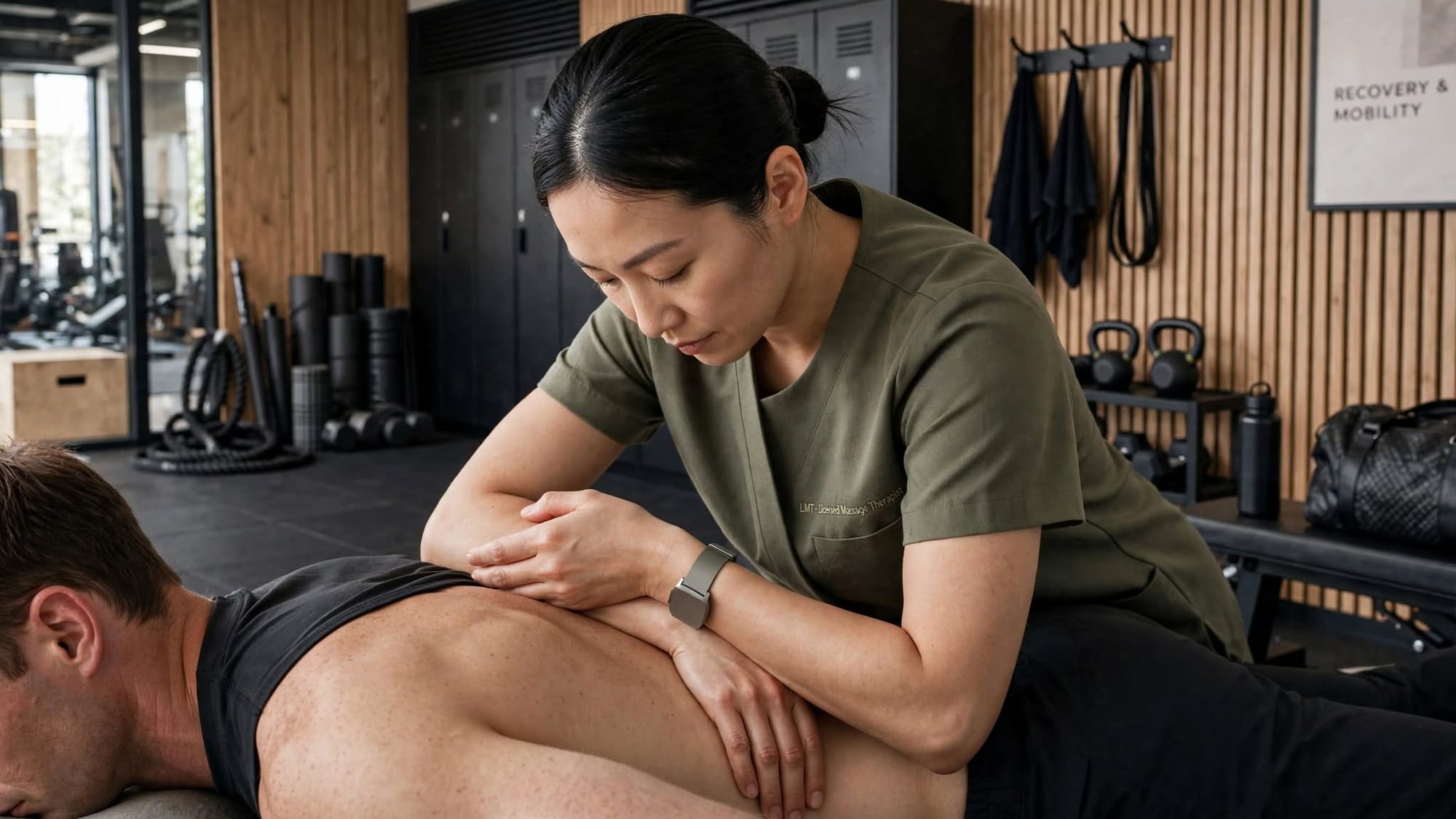
The Therapist's Body Is Part of the Business
There is a physical reality to massage that consumers rarely see.
The therapist's body is the instrument.
Every working day can involve repeated pressure, sustained positioning, bending, reaching, shifting body weight and using the hands, fingers, wrists, forearms, shoulders and back. Poor mechanics do not simply create an uncomfortable afternoon. Repeated over years, inefficient working habits can threaten career longevity.
That makes body mechanics a business issue.
Massage therapists who want sustainable careers have to think beyond today's appointment book. Table height matters. Stance matters. Technique selection matters. Recovery matters. Scheduling matters. The number and type of services performed consecutively matter.
This is particularly important in an industry that often celebrates being fully booked without discussing the physical cost of delivering those appointments.
A calendar packed from morning until evening can look successful on Instagram while quietly creating an unsustainable professional life behind the scenes.
The more sophisticated question is not simply, How many clients can I fit into a day?
It is, How can I build a practice my body can still perform five, ten or twenty years from now?
That conversation connects massage therapy to a larger transformation occurring throughout beauty. Estheticians are reconsidering repetitive hand-intensive services. Hairstylists are thinking more seriously about posture. Nail professionals are confronting ergonomics. Wellness practitioners are examining burnout. Career longevity is becoming part of professional education because a successful beauty career cannot be measured exclusively by revenue if the provider cannot physically sustain the work.
The Modern Massage Menu Is Becoming More Intelligent
The old spa menu often treated massage like a duration-based commodity: 50 minutes, 80 minutes, perhaps a few dollars more for an “upgrade.”
Today's client is increasingly looking for something more intentional.
That does not mean every spa needs an overwhelming menu of techniques. In fact, luxury often benefits from editing. What matters is helping the client understand the purpose of the experience.
A relaxation-focused service can be positioned around rest and sensory decompression. A more targeted session can focus attention on areas experiencing everyday muscular tension. Athletic and active clients may be interested in recovery-oriented experiences. Other guests may be drawn to slower wellness rituals in which massage is paired with heat, aromatherapy or complementary spa elements when appropriate.
The opportunity is not to turn massage into a collection of trendy buzzwords. It is to create clarity.
When clients understand why a service exists, they can select it more intelligently. When therapists conduct thoughtful consultations, the service can become more individualized. And when a spa communicates massage as part of an ongoing wellness strategy rather than an occasional reward, the relationship with the client changes.
This is where massage can become particularly powerful inside the membership economy.
A client who views massage as a birthday indulgence may book once or twice a year. A client who recognizes regular bodywork as part of their personal wellness rhythm thinks differently about frequency. That opens the door to recurring appointments, integrated spa memberships and longer client relationships—provided the business avoids overpromising outcomes and keeps recommendations centered on the client's needs.
The strongest membership strategy does not manufacture dependency.
It creates continuity.
Where Massage Meets the Beauty Industry
Massage also occupies a fascinating position within the broader beauty ecosystem because beauty itself is expanding.
The old model separated categories neatly. Skin belonged to the esthetician. Hair belonged to the stylist. Nails belonged to the nail professional. Massage belonged somewhere in the spa wing.
Modern consumers do not necessarily experience wellness in those compartments.
They may move from facial to massage to scalp treatment to sauna to cosmetic consultation while thinking of all of it as part of one larger objective: looking better, feeling better and maintaining themselves well.
That creates opportunities for collaboration—but it also makes professional boundaries more important.
Different licenses and professional roles carry different permissions. Training in one discipline does not automatically authorize practice in another. Beauty Spot's Texas compliance framework emphasizes this principle within esthetics: education and skill do not override the legal limits of a professional license. The same compliance mindset should shape multidisciplinary beauty businesses. Spa owners need to understand who is performing each service, under what credential, within what scope and under which sanitation, establishment and regulatory requirements.
For Texas operators especially, “wellness” should never become a vague umbrella used to blur regulated professional roles.
A beautifully integrated spa can still maintain clear professional lanes.
In fact, that clarity strengthens the brand.
Massage Is Also a Relationship Business
The hands may deliver the service, but relationships build the practice.
Successful massage therapists learn their clients over time. They remember pressure preferences. They notice when someone's usual areas of tension have changed. They understand whether a client wants conversation or silence. They create consistency without allowing the service to become mechanical.
Those details are not incidental hospitality.
They are retention strategy.
The beauty industry's most resilient businesses have always understood that clients rarely remain loyal because of technical execution alone. They return because of the combination of skill, trust, personalization and emotional experience.
Massage amplifies that dynamic because the service itself is so personal.
For independent therapists, this creates significant entrepreneurial opportunity. The modern practitioner can build a highly distinctive brand around environment, specialization, service philosophy, client experience and professional identity. A massage studio does not have to mimic a traditional day spa. It can feel architectural, athletic, restorative, minimalist, clinical-luxury, hospitality-driven or deeply sensory—provided the brand remains truthful about what the practitioner actually offers.
The opportunity is especially interesting in markets such as San Antonio, where luxury aesthetics, medical-spa culture, fitness, hospitality and traditional spa services increasingly overlap. The massage therapist can occupy an important place inside that ecosystem without becoming interchangeable with any of those professions.
Distinctiveness is an advantage.
Professionalism Is the New Luxury
For years, the wellness industry occasionally confused luxury with softness.
Soft robes. Soft lighting. Soft music. Soft language.
The next generation of luxury wellness is adding something stronger: authority.
Clients increasingly want environments that are beautiful and intelligent. They want practitioners who can explain what they are doing without overwhelming them. They want personalization without chaos. They want elevated experiences without questionable claims. They want to feel cared for without being sold a fantasy.
That is where the modern massage therapist has an opportunity to be seen differently.
Not as an accessory to the spa.
Not as the final service on the menu.
Not simply as the person clients visit when they have had a difficult week.
But as a trained professional whose work sits at the intersection of anatomy, movement, touch, wellness, hospitality, communication and trust.
And perhaps the greatest evolution happening in massage is not a new technique at all.
It is a new understanding of the profession itself.
Because when we reduce massage to relaxation, we miss the intelligence inside the treatment room. We miss the consultation that happened before the first touch. We miss the anatomical knowledge informing the therapist's hands. We miss the professional boundaries protecting the client. We miss the body mechanics protecting the practitioner. We miss the business strategy required to turn physically demanding work into a sustainable career. And we miss the extraordinary human skill involved in creating an environment where another person feels safe enough to become still.
Relaxation is beautiful.
It simply isn't the whole story.
The modern massage therapist represents something much larger: a profession built around the sophisticated use of touch in a culture that has become increasingly disconnected from its own body.
And in the future of beauty and wellness, that may make skilled human touch more valuable—not less.