
Inside The Woman’s Club of San Antonio: More Than a Social Club
Inside The Woman’s Club of San Antonio and discover how an organization founded in 1898 helped shape education, philanthropy, women’s leadership, Fiesta traditions, and cultural preservation across San Antonio.

The opening feature in Beauty Spot Magazine’s special editorial series on the women, traditions, architecture, civic work, and cultural legacy behind one of San Antonio’s enduring institutions.
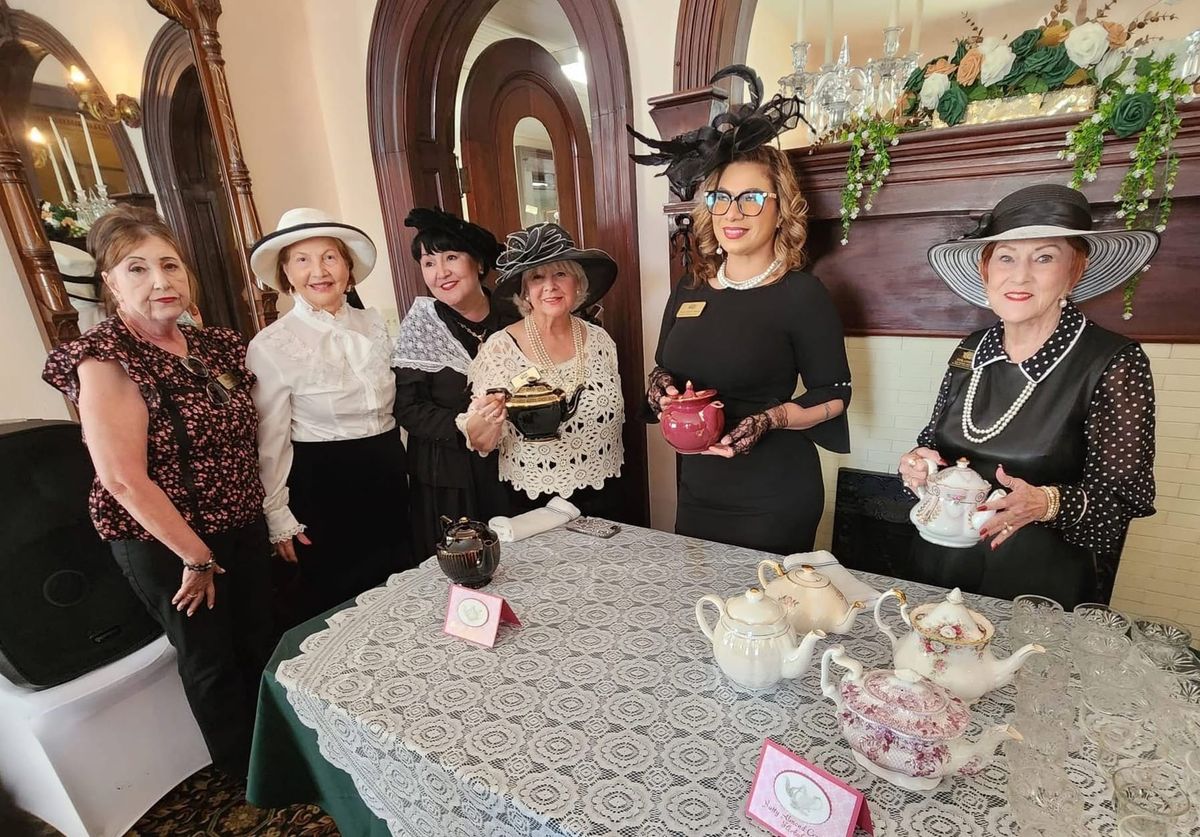
There are buildings in San Antonio that hold history, and then there are institutions that have helped make it. The Woman’s Club of San Antonio belongs to the latter category. From the sweeping columns of the Woodward Mansion on San Pedro Avenue, it would be easy for the unfamiliar observer to see only the visible symbols of an earlier social era: polished rooms, formal luncheons, flower shows, elegant hats, ceremonial traditions, and generations of women gathering beneath ceilings painted with old-world detail. But that reading is far too small. Behind the rituals is a civic organization whose record reaches into education, philanthropy, cultural preservation, women’s leadership, public service, Fiesta, and the infrastructure of San Antonio itself. Its own governing purpose remains strikingly expansive: “mutual improvement and cooperation in all charitable and educational undertakings that pertain to the greater good of humanity.” That statement is not ornamental language tucked into a historical document. It is the thread running through more than a century of organized women turning fellowship into public influence.
The Woman’s Club of San Antonio was organized on October 1, 1898, in a period when women were still decades away from securing the constitutional right to vote nationwide. Its founders, journalist Marin Fenwick and philanthropist and clubwoman M. Eleanor Brackenridge, had attended a General Federation of Women’s Clubs convention in Denver and returned to San Antonio inspired by what organized women could accomplish through education, structure, and collective action. They invited members of the city’s History Club to gather in Room No. 5 of the Daily Express building, where the new organization took shape. The Club’s historical record identifies fifteen charter members at that formative meeting and describes an institution conceived through research and planning rather than casual social affiliation. Even the current president’s message reaches back to that founding spirit, describing Brackenridge and Fenwick as women who exchanged the restrictions expected of Victorian womanhood for intellectual engagement and public purpose.
That distinction matters because women’s clubs have often been culturally flattened into images of teas, luncheons, white gloves, and drawing-room conversation. Those elements existed, certainly, but they existed alongside something more consequential: organized female civic power at a time when many formal political and professional systems offered women limited access. The historical achievements recorded by The Woman’s Club of San Antonio reveal just how wide that influence became. The Club helped organize the San Antonio Women’s Federation, identified in its history as the first club to endorse women’s suffrage in Texas. It organized Mothers’ Clubs in schools that later became Parent Teacher Associations. It worked to add Home Economics to the public-school curriculum, supported the hiring of the first women police matrons in San Antonio, established Travelers’ Aid stations, and raised money that helped establish both the San Antonio Art League and the Witte Museum. Its Modernist Round Table later formed a thrift shop for the Volunteer Services Council serving the San Antonio State Hospital, while the organization continued a tradition of providing scholarships to students pursuing further education. Read together, these are not the accomplishments of an organization standing adjacent to civic life. They place women directly inside the machinery of community development.
Education remains one of the most revealing ways to understand the Club. Its structure has long included study and interest groups known as Round Tables, supported by general meetings, programs, speakers, and organized areas of cultural and community interest. The Round Table model transformed membership into participation. Women did not simply join; they organized, studied, chaired, hosted, elected officers, raised funds, developed programs, and assumed responsibility for the ongoing life of the institution. That operational culture continues in the Club’s bylaws and governance, where members serve across areas including scholarships, restoration, public relations, long-range planning, community relations, finance, programs, Fiesta activities, and the stewardship of the historic house itself. What appears from the outside as tradition is, internally, a system of female leadership repeated often enough to become institutional memory.
And then there is the house.
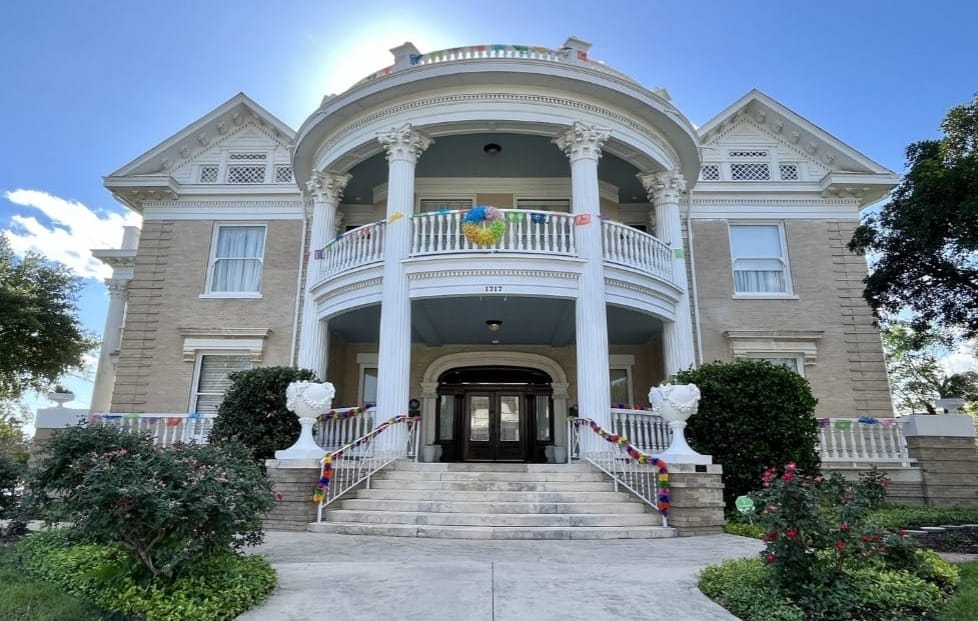
The Woodward Mansion is not merely the backdrop to the Club’s story; it has become one of its central characters. The organization purchased the property at 1717 San Pedro Avenue in 1926 for $47,000 after meeting in various locations during its earlier years. Built between 1904 and 1905 for David J. Woodward and his wife, May, the three-story Neo-Classical Revival residence was designed by noted architect Atlee B. Ayers. Nearly 9,000 square feet of interior space preserve an extraordinary collection of architectural details: massive two-story columns, a broad semicircular veranda, mahogany millwork, oak paneling, coffered ceilings, original frescoes, a carved fireplace, and a Gold Room furnished with French-style pieces the Club’s history says won a blue ribbon at the 1904 St. Louis Exposition. The property is associated with both the Texas and National Registers of Historic Places, making the Club not only a participant in San Antonio history but also a steward of a tangible piece of it.
Preservation here is active rather than decorative. The house requires maintenance, restoration, fundraising, governance, and collective decision-making. Club rules carefully regulate architectural changes and the treatment of historic rooms and furnishings. Members can direct memorial and honorary gifts toward the Woodward House Restoration Fund, scholarships, charities, and other approved projects through the Golden Book, weaving personal legacy into institutional stewardship. In that sense, the mansion becomes something larger than property. It is a physical archive of women choosing, generation after generation, to preserve a shared civic inheritance.
The same continuity is visible in Fiesta. The Woman’s Club identifies itself as a charter member of the Fiesta San Antonio Commission and records more than a century of involvement in the citywide celebration. Its current traditions include the Fiesta Flower Show, Fiesta Teen Queen Coronation, and Fiesta Hat Contest and Luncheon. The Ingenue program adds another dimension: younger generations of members’ families participate in their own Round Table and, through the Teen Queen tradition, become ambassadors for the Club during Fiesta. The Queen and Princess are selected through established eligibility and participation requirements, extending Club culture through ceremony, service, organizational involvement, and intergenerational mentorship. What could be dismissed as pageantry is better understood as cultural transmission—the deliberate teaching of belonging, responsibility, representation, and civic tradition.
The Club’s present-day charitable activity underscores that the historical mission has not simply been preserved behind glass. Its 2025–2026 yearbook identifies Respite Care of San Antonio, the Volunteer Services Council of the San Antonio State Hospital, and Texas VENGS among its designated charities while recognizing ongoing member support for charities, scholarships, restoration, and beautification of the clubhouse. Its standing rules also articulate an expectation of equal opportunity to participate in Club life regardless of race, creed, color, religion, national origin, sex, sexual orientation, age, or physical condition. Like any institution that has lived across three centuries, the Club exists in conversation with changing definitions of women’s leadership, community, access, relevance, and tradition. That evolution is part of the story, not separate from it.
And that is precisely why Beauty Spot Magazine is beginning here.
Inside The Woman’s Club of San Antonio will look beyond the shorthand of “social club” and enter the deeper architecture of the institution: the women who built it, the civic movements it touched, the extraordinary Woodward Mansion it preserves, the Round Tables that gave generations of members spaces for study and leadership, the scholarship and charitable work carried forward in the community, the cultural traditions tied to Fiesta, and the Ingenue program through which legacy moves from one generation to another. We will examine its beauty, but also its discipline. Its traditions, but also their meaning. Its history, but also the question every enduring institution eventually faces: how does legacy remain alive rather than simply admired?
Perhaps the most fitting answer is already contained in the Club’s motto: “Unity Is Our Strength.” For more than a century, women gathered here have demonstrated what that phrase can look like when translated into action—education becoming advocacy, fellowship becoming philanthropy, cultural interest becoming preservation, tradition becoming mentorship, and a private gathering place becoming part of a city’s public story.
The Woman’s Club of San Antonio may occupy one of the city’s grand historic homes. But its most significant architecture has always been human: women building networks, institutions, opportunities, traditions, and pathways for the generations coming behind them.
That is the story behind the doors at 1717 San Pedro Avenue.
And it is where our series begins.