
How Often Should You Get a Facial?
How frequently should you get a facial? For most people, every four to six weeks is a good baseline, but your skin type, treatment goals, sensitivity, and at-home skincare routine should always determine the ideal schedule.

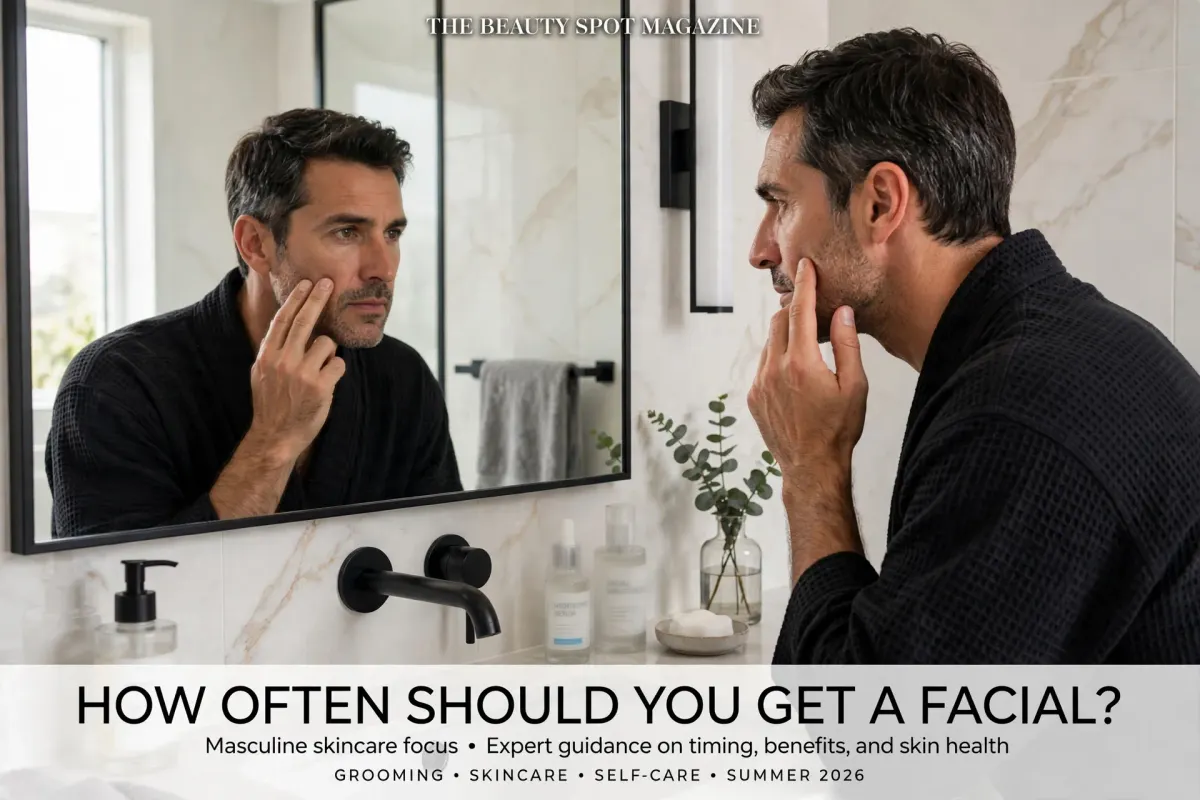
There is a particular kind of glow that only seems to appear after a professional facial. The skin looks clearer, feels softer, and carries that unmistakable finish that makeup artists, estheticians, and beauty editors recognize immediately: hydrated, polished, calm, and alive. It is tempting to believe that preserving that look is simply a matter of booking the same treatment every four weeks.
In reality, the ideal facial schedule is far more personal.
For many clients, a facial every four to six weeks offers an effective rhythm for maintenance. But that familiar recommendation is not a universal rule, nor is it a deadline dictated by the skin. The right frequency depends on what the facial is designed to accomplish, how resilient the skin is, which products or devices are being used, what is happening hormonally and environmentally, and how well the client’s home-care routine supports the treatment.
A facial should never be scheduled simply because the calendar says it is time. It should be scheduled because the skin is ready—and because the next service has a clear purpose.
The Four-to-Six-Week Rule, Explained
The monthly facial became popular because it creates a consistent opportunity to assess the skin, support hydration, manage surface congestion, refine home care, and make measured adjustments before small concerns become larger ones. It also fits naturally into the rhythm of luxury maintenance: regular enough to sustain momentum, but not so frequent that the skin is constantly being manipulated.
Professional esthetics education places significant emphasis on consultation, skin analysis, contraindications, product selection, record keeping, and treatment customization. These are not secondary details. They are the reason two clients receiving a “monthly facial” may need entirely different protocols.
The monthly appointment is therefore best understood as a reassessment window rather than a promise that every client requires aggressive exfoliation, extractions, enzymes, acids, devices, and massage at every visit.
Some appointments may focus on deep hydration. Others may prioritize barrier support, gentle cleansing, controlled exfoliation, calming, or seasonal correction. The most sophisticated treatment plans are not repetitive. They evolve.
The best facial schedule is not the busiest schedule. It is the schedule that creates visible progress without exhausting the skin.
For General Skin Maintenance
For balanced skin with no major inflammatory concerns, a facial every four to six weeks is often a strong starting point. This cadence gives the provider regular visibility into changes in hydration, texture, congestion, sensitivity, pigmentation, and product tolerance.
A maintenance facial may include cleansing, skin analysis, gentle exfoliation, limited extractions when appropriate, massage, a treatment mask, hydration, and sun protection. The exact sequence should remain flexible. A client who arrives with a compromised barrier after travel, excessive sun exposure, or overuse of active ingredients may need a restorative treatment rather than the exfoliating facial originally planned.
Clients with excellent home care may also need fewer appointments. A consistent routine built around gentle cleansing, appropriate hydration, daily sunscreen, and carefully selected treatment products can extend the results of professional care. In these cases, a facial every six to eight weeks may be perfectly appropriate.
Professional treatments should elevate a strong routine—not compensate indefinitely for an unsuitable one.
For Dry, Dehydrated, or Barrier-Stressed Skin
Dryness and dehydration are often discussed as though they are interchangeable, but they may require different strategies. Dry skin generally lacks sufficient oil, while dehydrated skin lacks water. A person may be oily and dehydrated at the same time, particularly after excessive exfoliation, harsh cleansing, environmental exposure, or aggressive acne routines.
When the barrier is visibly stressed, more treatment is not always the answer. The client may benefit from a series of gentle, hydration-focused facials spaced two to four weeks apart initially, followed by wider maintenance intervals once comfort and resilience improve.
These appointments should feel restorative rather than corrective. Think creamy cleansing, reduced friction, soothing masks, humectant-rich hydration, lipid support, cooling techniques, and a simplified home routine. Strong acids, abrasive exfoliation, unnecessary extractions, and repeated device use may intensify sensitivity rather than solve it.
The barrier-repair era has changed the way educated clients view facials. Redness, tightness, peeling, and prolonged irritation are no longer automatically interpreted as evidence that a treatment “worked.” In many cases, they are signs that the skin was asked to tolerate more than it could comfortably manage.
For Congested or Acne-Prone Skin
Congested and acne-prone clients may initially benefit from more frequent professional support, often every two to four weeks, depending on the severity of the condition, the type of lesions present, the home-care plan, and whether the client is also under medical care.
These facials are not simply extraction appointments. Successful acne-focused care requires pattern recognition. The provider must consider product buildup, oil production, inflammation, follicular congestion, picking, friction, hormonal fluctuations, medication use, shaving habits, makeup, and inconsistent home care.
Active cystic acne, open lesions, significant inflammation, and other contraindications may require treatment modification, postponement, or medical referral. Professional facial education specifically identifies client consultation and contraindication screening as essential parts of safe service planning.
The temptation to “clean everything out” in one appointment should be resisted. Excessive extractions can create trauma, prolonged redness, post-inflammatory discoloration, and a damaged barrier. A refined acne program favors consistency, restraint, documentation, and realistic expectations.
Once congestion is better controlled, the frequency can often be extended to every four to six weeks.
For Sensitive or Reactive Skin
Sensitive skin should not be placed on an automatic monthly exfoliation schedule. Some clients tolerate a calming facial every four weeks beautifully. Others need six to eight weeks between appointments, especially if they experience rosacea-like flushing, eczema, allergies, barrier disruption, or reactions to common cosmetic ingredients.
The goal is not to see how much the skin can withstand. The goal is to learn what allows it to remain stable.
Sensitive-skin appointments should be built around careful questioning, conservative product selection, patch testing when appropriate, reduced heat and friction, and close attention to previous reactions. The treatment plan should also account for dermatologic medications and any diagnosed skin condition.
Clients with persistent burning, unexplained rashes, spreading redness, infection, or recurring inflammation should be referred to an appropriate medical professional rather than repeatedly treated cosmetically.
For Pigmentation, Texture, and Age-Supportive Goals
Clients focused on uneven tone, rough texture, fine lines, or visible photoaging often need a treatment series rather than an occasional luxury facial. Depending on the protocol, appointments may be scheduled every two to six weeks for a defined period, followed by maintenance treatments.
The important distinction is that a corrective series should be purposeful. Each session should have a documented objective, a recovery expectation, and a home-care strategy. More intensity does not guarantee faster improvement.
Treatments involving stronger exfoliation, advanced devices, tissue injury, or medical-style claims require particular caution. In Texas, licensed estheticians may perform skin treatments within their authorized scope, but treatments that penetrate too deeply, alter tissue beyond permitted limits, or cross into medical practice may fall outside that scope. The Beauty Spot Texas framework also flags aggressive chemical peels, advanced exfoliation, and devices that imitate medical procedures as high-risk areas requiring careful compliance awareness.
This matters because the phrase “facial” can now describe everything from a soothing hydration service to a highly advanced procedure. The more intensive the treatment, the less useful a generic monthly recommendation becomes.
What About Microneedling and Other Advanced Procedures?
Microneedling should not be treated as a routine facial upgrade. It is an advanced procedure with specific contraindications, recovery requirements, treatment intervals, and scope-of-practice implications.
The microneedling training material in the Beauty Spot source library recommends a treatment series of two to four sessions spaced approximately three to six weeks apart, with maintenance around every six months. It also identifies contraindications including active herpes simplex, active cystic acne, open lesions, uncontrolled diabetes, and a history of keloids.
That schedule is procedure-specific. It should not be confused with the frequency of a standard facial, and it should never be applied without appropriate licensing, training, screening, supervision where required, and compliance with Texas law.
After any advanced treatment, the skin may need a period of quiet recovery. Adding peels, aggressive exfoliation, waxing, or additional procedures too soon can increase irritation and interfere with healing.
When Should You Skip a Facial?
A facial should generally be postponed or modified when the skin has active infection, open wounds, a significant sunburn, unexplained swelling, severe inflammation, a contagious condition, or an active reaction that has not been identified.
The same caution applies after certain medical procedures, injectables, laser treatments, surgery, or newly prescribed topical medications. Timing should be coordinated with the appropriate medical provider.
Pregnancy, allergies, medication use, recent exfoliation, retinoids, isotretinoin history, and upcoming events should all be discussed during consultation. The safest treatment room is one where the provider is willing to say, “Not today,” when the skin is not an appropriate candidate.
That is not a lost appointment. It is evidence of professional judgment.
The Texas Perspective: Safety Is Part of Luxury
In Texas, the luxury aesthetics market is highly results-driven. Clients often arrive asking for stronger peels, more advanced devices, faster correction, and treatments they have seen online. But premium positioning should never depend on pushing beyond legal or professional boundaries.
Texas-focused Beauty Spot guidance emphasizes that the treatment room is a regulated environment. Sanitation, disinfection, equipment safety, documentation, establishment requirements, and scope awareness are part of the service—not administrative details hidden behind it.
For the client, this means choosing a provider based on more than ambiance. Ask who is performing the treatment, what license or credential they hold, what the service is designed to do, what contraindications apply, and what recovery should realistically look like.
A beautiful room may create the mood. Professional restraint creates the trust.
So, How Often Should You Book?
For most people seeking healthy maintenance, every four to six weeks is a thoughtful baseline. Dry or barrier-stressed skin may benefit from gentle support every two to four weeks for a limited period. Congested skin may require closer professional monitoring at first. Sensitive skin may need longer intervals. Corrective and advanced treatments should follow procedure-specific schedules rather than a generic monthly rhythm.
The clearest answer is this: book according to the condition of your skin, the purpose of the treatment, and the professional judgment of a qualified provider.
A facial should leave the skin better supported—not simply more processed.
The future of professional skincare is not built on chasing intensity. It is built on intelligent repetition, strategic restraint, consistent home care, and treatments that respect the skin’s capacity at every stage.
That is how glow becomes more than a moment.
It becomes skin longevity.