Body Treatments Reimagined
Discover how skin longevity, restorative wellness, personalization, and responsible technology are reshaping professional body treatments—and creating new opportunities for luxury spas and advanced beauty providers.

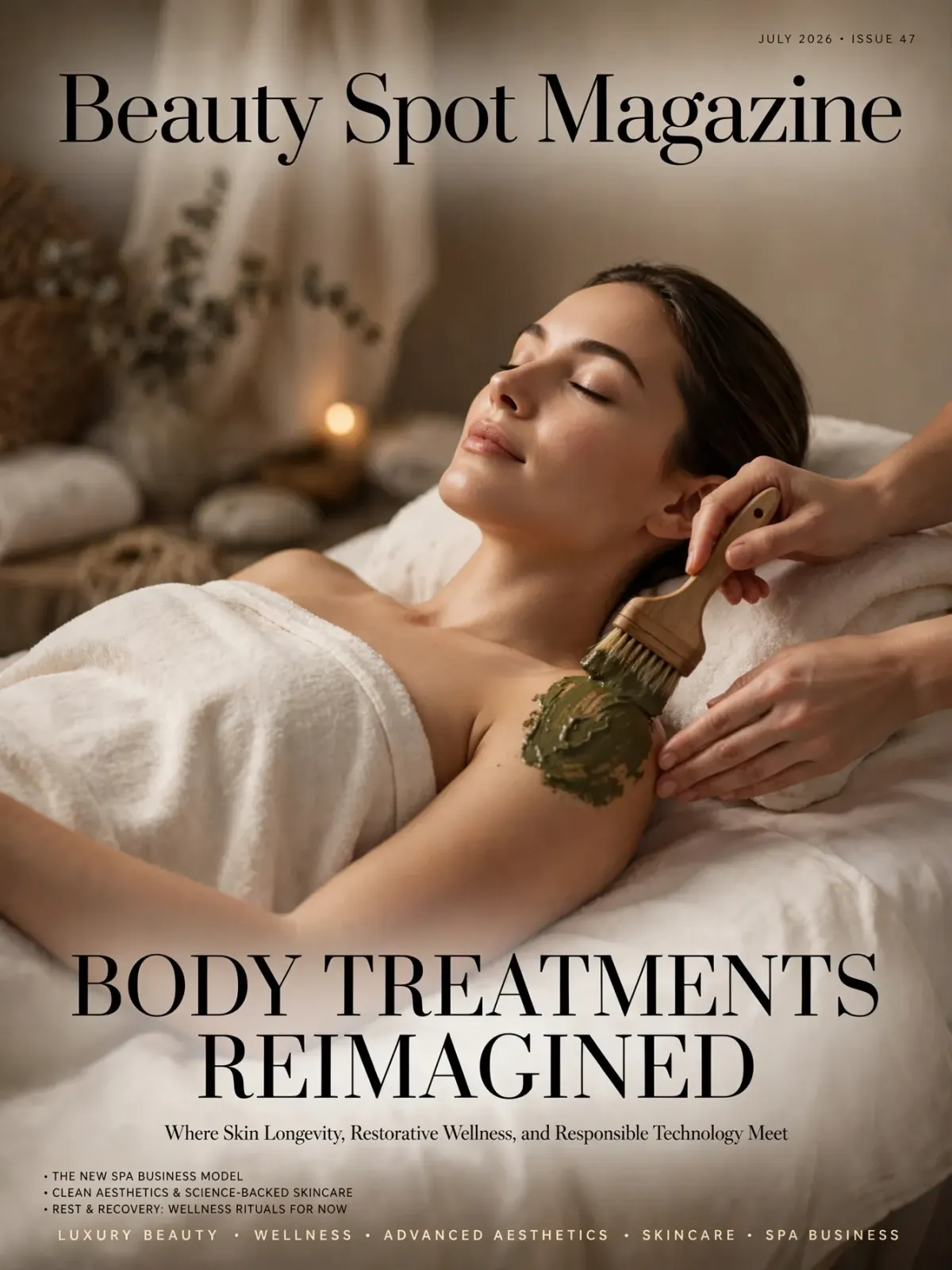
Where Skin Longevity, Restorative Wellness, and Responsible Technology Meet
For years, body treatments lived in the quieter pages of the spa menu—booked before a vacation, a wedding, or the first bare-shouldered days of summer. They were polished, pleasurable, and often treated as optional: a beautiful indulgence for clients who had already invested in the face.
That hierarchy is beginning to dissolve.
Today’s most forward-thinking spas are expanding the definition of skin health beyond the jawline. The body is no longer an afterthought in the client journey, and body care is no longer being framed exclusively around inches, imperfections, or dramatic transformation. A more sophisticated category is emerging—one shaped by barrier support, tactile refinement, hydration, recovery, sensory restoration, personalized home care, and carefully selected technology.
The future of body treatment is not simply about shaping the silhouette. It is about helping clients feel more comfortable, cared for, and connected to the skin they live in every day.
The Body Is Becoming Part of the Skin-Health Conversation
Professional skincare has spent years teaching clients to understand facial concerns through the language of hydration, exfoliation, barrier function, environmental exposure, inflammation awareness, and long-term maintenance. That same intelligence is now moving below the neck.
Dryness, rough texture, uneven tone, visible congestion, loss of suppleness, seasonal sensitivity, and the effects of friction or environmental exposure do not end at the face. Yet body care has often been reduced to a scrub, a lotion, and an occasional wrap.
The new generation of body services is more considered.
A thoughtful protocol may combine cleansing, controlled exfoliation, replenishing hydration, massage, thermal elements, mineral-rich applications, light-based support where appropriate, or other technologies selected according to the client’s goals and the provider’s legal scope. The objective is not to promise reinvention in a single appointment. It is to create a credible, luxurious pathway toward smoother-feeling skin, stronger home-care habits, and a more intentional relationship with the body.
This distinction matters. Modern beauty clients are increasingly wary of exaggerated promises. They still want visible refinement, but they also want honesty. They want to know what a service is designed to do, what it cannot do, how it should feel, and whether it belongs in a one-time ritual or a longer maintenance plan.
The body is no longer being treated as a seasonal project. It is becoming part of the client’s ongoing skin-health strategy.
Wellness Is Changing the Meaning of Luxury
Luxury beauty once announced itself through excess: more products, more steps, more ornamentation. Today, the most compelling luxury experiences often feel quieter.
A softly lit treatment suite. Warm linens arranged before the client arrives. A consultation that feels attentive rather than transactional. Aromatic notes chosen with restraint. Unhurried transitions. Skilled touch. A post-treatment recommendation that supports the client without overwhelming them.
These details may appear simple, but together they create something increasingly rare: the feeling of being fully considered.
That emotional dimension is central to the rise of body care. Clients are not only purchasing exfoliation, hydration, massage, or device time. They are purchasing a protected interval in which the body is not being judged, corrected, or rushed. The best treatments create space for both visible care and personal restoration without turning wellness language into a medical promise.
This is where modern luxury becomes more intelligent. It does not need to describe every relaxing service as “nervous system regulation,” nor does it need to label every ritual “preventive medicine.” It can simply acknowledge that sensory design, warmth, quiet, breath, and thoughtful touch may help a client feel calmer, more grounded, and temporarily removed from the pace of daily life.
That is valuable without being overstated.
Technology Is Expanding the Menu—and Raising the Standard
Technology has introduced new possibilities into the body-treatment room, but it has also introduced new responsibilities.
Depending on the setting, provider qualifications, device classification, manufacturer instructions, and applicable state law, professional body services may incorporate technologies such as LED, hydrotherapy, compression systems, infrared heat, vacuum-assisted massage, vibration, percussion, radiofrequency, ultrasound-based systems, cryotherapy, or electromagnetic stimulation.
These technologies should not be treated as interchangeable. They differ in intended use, depth of action, risk profile, contraindications, evidence base, and regulatory requirements. Some may fit comfortably within a wellness or esthetic environment. Others may require a medical setting, medical oversight, delegation, or a differently licensed professional.
For spa owners and providers, the question is therefore not simply, “Can we purchase this device?” The more important questions are: What is it intended to do? What claims are supported? Who is legally permitted to operate it? What training does the manufacturer require? What contraindications must be screened? What documentation should be maintained? And what happens when a client’s goal falls outside the service’s legitimate capabilities?
In Texas, as in every state, training and legal scope are not the same thing. A certificate may demonstrate that someone completed a course; it does not automatically establish that the service is permitted under that person’s license. High-level providers understand that compliance is not an obstacle to luxury positioning. It is part of it.
The most trusted treatment rooms are not built on aggressive claims. They are built on informed consent, sanitation, accurate consultation, appropriate referral, realistic expectations, and the confidence to say when a treatment is not suitable.
Personalization Is Replacing the One-Size-Fits-All Protocol
No two clients experience skin dryness, sensitivity, environmental exposure, physical stress, hormonal change, or aging in precisely the same way. A body protocol that feels transformative for one person may feel excessive, inadequate, or simply irrelevant for another.
Personalization begins before the client changes into a robe.
A sophisticated consultation may consider the client’s visible skin condition, sensitivity, hydration habits, current products, exercise routine, occupational demands, seasonal exposure, fragrance preferences, comfort level, wellness goals, medical history, and previous experience with professional treatments. It should also identify contraindications and determine whether the client’s expectations are appropriate for the service being offered.
This information allows the provider to make better choices. A client concerned with rough texture may benefit from a carefully controlled exfoliation and barrier-focused hydration plan. Another may be seeking a recovery-centered ritual after travel or intense physical activity. A client with reactive skin may require fewer steps, cooler temperatures, fragrance-free products, and a deliberately conservative approach.
Personalization is not the addition of more modalities. It is the removal of what the client does not need.
That philosophy also improves the luxury experience. Clients feel the difference between a protocol performed on everyone and a treatment designed around them. The details—pressure, texture, temperature, pacing, product selection, and home-care guidance—become part of a coherent treatment story rather than a collection of upgrades.
The Rise of Full-Body Skin Longevity
Skin longevity has become one of beauty’s defining conversations, but its most meaningful interpretation is not the pursuit of agelessness. It is the preservation of function, comfort, resilience, and quality over time.
For the body, that may mean maintaining hydration, supporting barrier integrity, minimizing avoidable irritation, addressing texture consistently, using sun protection on exposed areas, and choosing professional treatments that complement—not replace—daily care.
The language of longevity is especially useful when it shifts clients away from crisis-based beauty. Instead of waiting for the skin to become severely dry, visibly neglected, or suddenly exposed before an event, clients can approach body care as maintenance.
That maintenance does not need to be elaborate. A well-designed plan may include seasonal exfoliation, replenishing treatments during dry months, targeted services for specific areas, and home-care recommendations clients can realistically follow. The value is cumulative consistency, not the fantasy of an instant cure.
This is also where professional education becomes essential. Providers should be able to explain why a treatment was selected, how frequently it may be appropriate, what the client should avoid afterward, and when a skin concern requires referral to a medical professional.
Longevity is not created by intensity alone. Often, it is protected through restraint.
Education Is the New Client-Retention Strategy
Body services can be difficult for clients to evaluate because the category is saturated with ambiguous language: detox, sculpt, tighten, drain, melt, reset, stimulate, contour. These words are persuasive, but they can also obscure what a service actually does.
The most credible providers translate treatment language into clear expectations.
What will the client likely feel during the service? What visible or tactile change may be reasonable afterward? Is the treatment designed for surface refinement, temporary cosmetic improvement, relaxation, maintenance, or a series-based goal? Are results dependent on home care, hydration, movement, nutrition, or other lifestyle factors? How long might any cosmetic effect last? What risks or limitations should the client understand?
Education does not diminish the allure of a treatment. It deepens trust.
A client who understands the purpose of a protocol is more likely to follow aftercare, return at an appropriate interval, and make informed purchasing decisions. They are also less likely to feel disappointed by results that were never realistically possible.
For luxury spas, this creates a powerful business advantage. The provider becomes more than a service technician. They become a trusted interpreter of an increasingly complicated treatment landscape.
From Occasional Indulgence to Recurring Ritual
The business opportunity in body care is not simply the addition of more services. It is the creation of a more complete client journey.
Traditionally, body treatments were marketed around events and seasons. That can still be useful, but it limits the category. When body care is repositioned around maintenance, comfort, skin quality, recovery, and personalized ritual, it becomes relevant throughout the year.
A spa might build seasonal programs around winter dryness, summer exposure, pre-event refinement, travel recovery, or post-workout relaxation. It might create focused series for clients who value regular exfoliation and hydration. It might integrate body care into an existing facial membership rather than isolating it as a rarely booked luxury.
The strongest programs avoid overcomplication. They begin with a defined client need, a legally appropriate protocol, a clear recommendation schedule, and home care that supports the service. They also give the provider room to adjust the experience over time.
Membership design should never pressure clients into unnecessary frequency. Its purpose is to make thoughtful maintenance more accessible and consistent while creating predictable value for both the client and the business.
When executed well, recurring body care can increase retention, introduce clients to new treatment categories, improve retail education, and create stronger continuity between the treatment room and the client’s daily routine.
The Experience Must Be as Considered as the Protocol
Body treatments are intimate by nature. Draping, temperature, touch, sound, scent, privacy, and communication all shape the client’s sense of safety.
This makes experience design more than aesthetic decoration. It is part of professional care.
Providers should explain how the client will be positioned, what areas will be treated, whether the service involves heat or pressure, and how the client can communicate discomfort. Draping should feel secure. Transitions should be unhurried. Product temperatures should be checked. Fragrance should be optional, not assumed. The room should feel private, composed, and prepared.
The final moments matter as much as the opening ones. Removing product thoroughly, allowing the client time to rise, offering water or tea, reviewing aftercare, and avoiding an abrupt sales conversation all reinforce the quality of the experience.
Luxury is often revealed in what the client never has to ask for.
A More Responsible Future for Body Care
Body treatments are entering a more ambitious era. Technology is expanding what may be offered. Skin longevity is broadening the conversation. Wellness culture is changing what clients value. And personalization is raising expectations for both results and experience.
But progress should not be measured by how many devices a spa owns or how aggressively a service is marketed.
The future belongs to providers who can combine skilled touch with technical literacy, modern aesthetics with ethical restraint, and beautiful experiences with honest education. It belongs to businesses that understand the difference between a treatment benefit and a medical claim. It belongs to professionals who recognize that compliance, sanitation, consultation, and referral are not backstage concerns—they are part of the client promise.
Human touch will remain essential, not because technology lacks value, but because the meaning of care cannot be automated. A device may support a protocol. A product may improve the feel of the skin. A carefully designed series may help a client maintain results. Yet the provider remains the person responsible for interpretation, judgment, communication, and trust.
Body care is no longer waiting quietly at the bottom of the menu.
It is becoming one of the most expressive categories in modern beauty: sensorial yet strategic, luxurious yet disciplined, technically evolving yet deeply human.
And perhaps that is the most important shift of all. Caring for the body is no longer being positioned as preparation for being seen.
It is becoming an act of feeling fully at home in one’s own skin.
Professional Scope Note
Device-based and advanced body services vary significantly in their intended use, contraindications, regulatory classification, and licensing requirements. Providers should verify applicable state law, facility requirements, manufacturer instructions, insurance coverage, training standards, and medical-oversight obligations before introducing any modality. This article is educational and does not replace legal, regulatory, or medical guidance.