Why San Antonio's Beauty Education must include Entrepreneurship...

From Treatment Room to Boardroom
In the quiet glow of treatment rooms across San Antonio, a transformation is underway—one that extends far beyond skincare. The modern beauty professional is no longer defined solely by technique, but by vision. And in today’s evolving landscape, beauty education is being called to rise accordingly.
For Teresa Chavarria-Herring, this shift is not theoretical—it is lived, observed, and actively shaped. Serving on four advisory boards for beauty schools across San Antonio, she occupies a rare vantage point within the industry, one that reveals both its strengths and its most urgent gaps.
What she sees is clear: the future of beauty belongs to those who understand business as deeply as they understand skin.
There was a time when success in esthetics followed a predictable rhythm. Graduation led to employment. Employment led to experience. And experience, for many, plateaued within the framework of someone else’s brand. It was a model that sustained an earlier era of the industry—but that era is quietly dissolving.
Today, success is no longer measured by hours booked, but by ownership built.
Across San Antonio’s expanding beauty economy—where independent studios, med spas, and advanced esthetics practices are flourishing—a new expectation has taken hold. Clients are no longer simply seeking services. They are seeking identity. They are drawn to professionals who communicate authority, who understand value, and who create experiences that feel curated, intentional, and unmistakably their own.
And yet, within many classrooms, the focus remains incomplete.
Technique is taught with precision. Protocol is refined to perfection. But the deeper architecture—the business of beauty, the psychology of client loyalty, the discipline of pricing, the power of brand narrative—too often remains untouched. The result is a generation of highly skilled professionals prepared to perform, but not always prepared to build.
From her position across multiple school boards, Teresa observes this pattern repeatedly. Talent is abundant. Vision is present. But without entrepreneurial education, that potential is too often confined rather than expanded.
Skill without strategy is simply service. Strategy is what transforms talent into legacy.
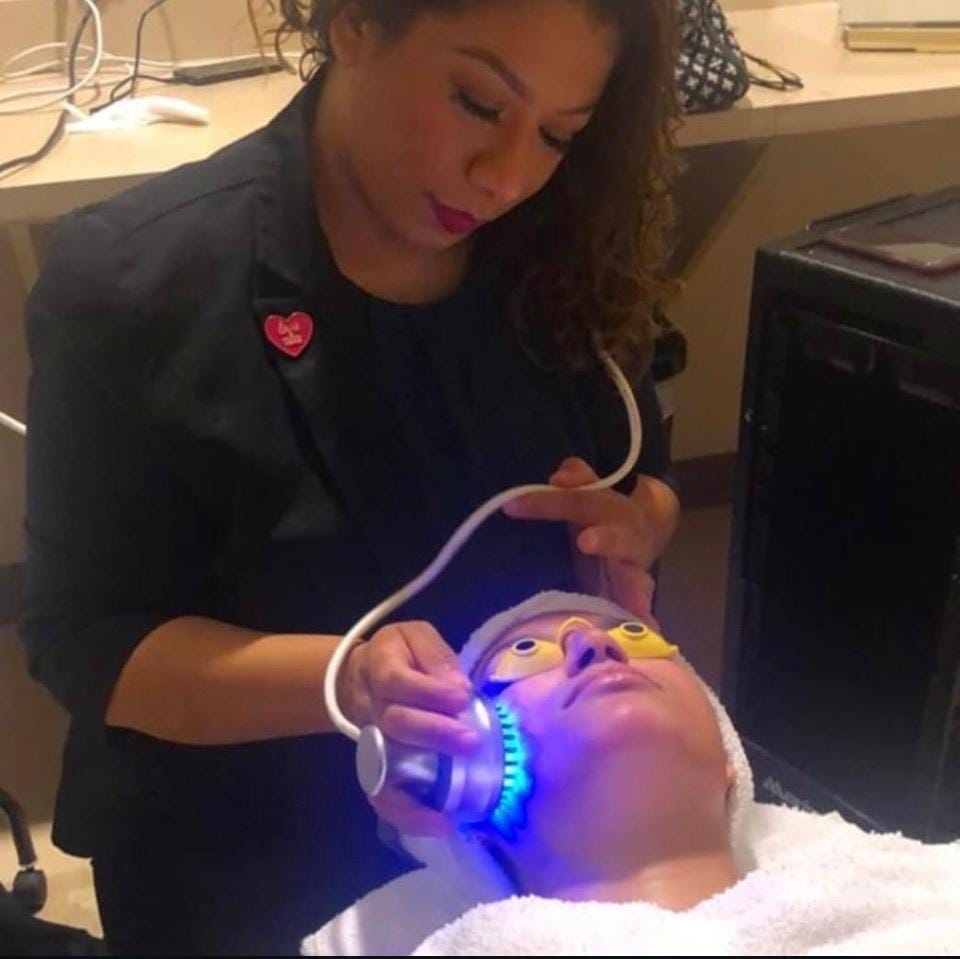
Entrepreneurship in beauty does not diminish artistry—it elevates it. It gives form to creativity. It assigns value to expertise. It allows a professional to move from responding to demand to shaping it.
In a city like San Antonio, where culture, community, and commerce intersect with unmistakable energy, the opportunity is profound. Beauty professionals who understand how to price with intention, market with authenticity, and cultivate relationships with purpose are no longer competing within the market—they are defining it.
The digital landscape has accelerated this shift. Social presence is no longer an accessory to the business; it is central to it. A single image can establish authority. A consistent voice can build trust. A clear business structure can transform a solo practitioner into a scalable brand.
This is where education must evolve.
To teach esthetics without entrepreneurship is to prepare students for an industry that no longer exists. The treatment room is only the beginning. The boardroom—where decisions about growth, expansion, partnerships, and positioning are made—is where longevity is secured.
Educators now carry a deeper responsibility. They are not simply instructors of technique; they are architects of possibility. Each student represents not just a future employee, but a potential founder, a future employer, a creator of opportunity within her own right.
The mission, then, must expand. It is no longer enough to prepare students to enter the industry. They must be prepared to shape it.
Across San Antonio, this evolution is already beginning to take form. Forward-thinking programs are integrating business development, branding strategy, and financial literacy into their curriculum. They are recognizing that confidence within the treatment room must be matched by confidence within the marketplace.
Because true success in beauty is not defined by how many clients you serve, but by what you build beyond the service itself.
It is the distinction between working within a business and owning one. Between generating income and creating equity. Between participating in the industry and leaving an imprint upon it.
And ultimately, it is about legacy.
When a beauty professional understands entrepreneurship, she is no longer limited by opportunity—she becomes its source. She creates pathways not only for herself, but for others. She hires, mentors, expands, and contributes to the economic and cultural fabric of her city.
From the treatment room to the boardroom, this is the evolution now unfolding in San Antonio.
Elevated. Intentional. Entrepreneurial.
Because in the end, beauty is not simply about transformation.
It is about creation.
And the women who understand both will define what comes next.